
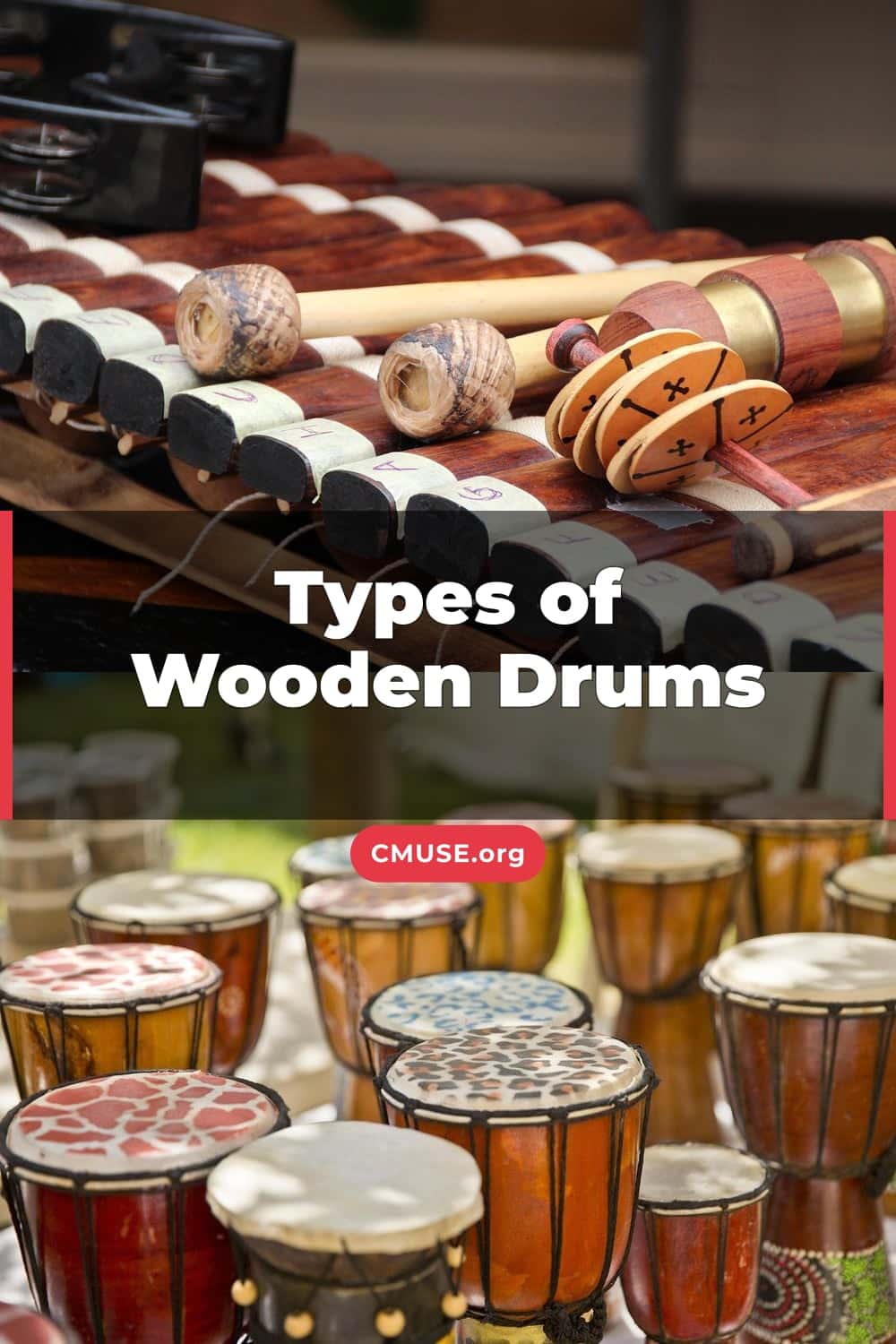
The deep thump of a wooden drum has a way of anchoring you. It reaches past your ears and settles somewhere in your chest, the way few other instruments manage. Whether you are circling a fire at a summer gathering or sitting alone in a quiet room trying to find a rhythm that matches your pulse, that warm, organic sound reminds you that music once lived entirely in the materials nature provided.
Wooden drums carry centuries of human hands, cultural stories, and careful craftsmanship inside them. The type you choose changes everything about how you play, what you feel, and even who you play with. Some bark out sharp commands that cut through a crowded festival.
Others murmur low enough to vibrate the floorboards under your feet. Knowing the main varieties helps you pick the drum that will actually become part of your life instead of gathering dust in the corner.
Common Varieties of Wooden Drums
1. Frame Drums
Frame drums sit at the quieter end of the spectrum yet somehow command attention. These are the shallow, circular instruments where the drumhead stretches across a simple hoop, often no deeper than the width of your palm. Players hold them in one hand and strike or brush them with the other, which gives an intimate, almost conversational feel.
The Bodhran from Ireland is the most recognized example, its goatskin head tensioned with wooden crossbars or tuning screws depending on the maker. When you tap the edge you get a crisp snap, when you strike the center the note blooms into something rounder and darker. Frame drums reward subtlety.
They are perfect for indoor sessions or meditation work because they never overwhelm a small space, yet their tone still carries emotional weight. The tradeoff is limited volume. You will not lead a marching procession with one, but you might lose an entire afternoon exploring the tiny shifts in pressure that change its voice completely.
2. Djembe
The djembe stands in complete contrast, built like a goblet from a single piece of wood. Traditionally carved from West African hardwoods such as lenke or khadi, the drum narrows at the base then flares dramatically toward the top where the thick skin is roped on under tremendous tension. That shape turns the drum into an acoustic amplifier.
A light slap on the edge produces a high ringing tone while a full palm stroke in the middle delivers a bass note you can feel in your sternum. Djembes earned their global popularity for a reason. They project outdoors without amplification, they respond instantly to the slightest change in technique, and they invite complex polyrhythms that keep both player and listener alert.
The downside appears when you try to play one sitting for long periods. The goblet shape wants to be held between your knees or perched on a stand, and the sheer power it generates can fatigue your hands faster than gentler drums. Still, if you want an instrument that feels alive in your lap, few wooden designs match it.
3. Native American Frame Drums
Native American frame drums take the basic hoop idea and push it in an entirely different emotional direction. Often constructed from cedar or ash with rawhide lacing, these instruments tend to be larger in diameter yet still shallow. Many feature painted symbols or feathers attached to the frame, turning the drum into both musical tool and spiritual object.
The sound is usually lower and more resonant than an Irish bodhran because the head is allowed slightly more movement. Players use a padded beater rather than bare hands, which produces a warm, round strike that seems to roll outward in slow motion. These drums shine in healing circles and ceremonial settings where volume matters less than intention.
The wood itself often carries scent memories. Strike a cedar drum in a warm room and the faint evergreen aroma mixes with the rhythm in a way that feels transportive. The main limitation is durability in humid climates.
Rawhide heads tighten and loosen with weather, so these instruments ask for regular attention and respect.
4. Talking Drum
The talking drum occupies its own strange category. Shaped like an hourglass and carved from a single log, this West African instrument uses ropes that connect the two heads. Squeeze the drum under your arm while striking it and the pitch bends, allowing the player to mimic the tonal patterns of human speech.
The wood, usually from the iroko or mahogany family, must be lightweight enough to carry yet dense enough to project across a village. Talking drums taught generations of musicians that rhythm and melody are not separate ideas. The instrument literally speaks in proverbs and warnings, its voice sliding between notes with each subtle pressure change.
Modern players sometimes add it to contemporary ensembles, but the true craft remains in the hands of those who still know the old phrases. It is not an easy drum for beginners. The technique feels awkward at first and the cultural context runs deep.
Yet once you hear a master make it gossip and laugh, it is hard to go back to drums that only hit in fixed tones.
5. Conga Drums
Conga drums, though often associated with Latin music, have deep wooden roots. Traditional models are carved from a single trunk of cedar or oak, tapered slightly from top to bottom like a tall barrel. The staved construction used in many modern versions still honors the original idea that the wood itself shapes the resonance.
Congas produce three main tones, the open slap, the bass thump, and the closed muted strike, each requiring precise hand placement. Because they stand upright on the floor, they free both hands for rapid patterns and allow the player to stand or sit while performing. Their warm mid-range voice sits beautifully between the high crack of a snare and the low rumble of a bass drum, which is why they appear in everything from salsa bands to acoustic singer-songwriter setups.
The size you choose matters. A small quinto gives you agility and higher pitch while a large tumba delivers earthquake lows. Most players end up owning at least two so they can converse with themselves.
6. Taiko Drums
The Japanese taiko drum family brings theatrical scale to the wooden drum world. These barrel-shaped instruments are often built from zelkova or keyaki wood, sometimes hollowed from a single massive log, sometimes assembled with ancient coopering techniques. The largest odaiko can stand taller than the person who plays them, requiring two thick sticks and a full-body commitment with each stroke.
The sound is less about subtle nuance and more about physical presence. When a taiko ensemble performs, the air itself seems to thicken. Smaller shime-daiko offer more control and are used for intricate patterns within the larger roar.
Taiko playing demands fitness as much as musicality. The posture, the precise angle of the strike, and the shared breathing with other drummers turn performance into something close to dance. If you are drawn to power and community, these drums deliver both in generous measure.
They are not casual backyard instruments. They ask for space, respect, and serious practice.
7. Ashiko Drum
The ashiko drum offers a tapered conical shape that blends elements of the djembe and the conga. Carved from one solid piece of wood, usually Nigerian iroko or American poplar in modern versions, it stands taller than a djembe but lacks the goblet flare at the base. This design produces a focused bass tone that decays more slowly than a djembe while still allowing bright slaps at the rim.
Many players appreciate the ashiko because it sits comfortably on the floor without a stand and offers a slightly gentler learning curve for those new to hand drumming. The straight taper also makes it easier to stack or transport. Its voice sits somewhere between the explosive West African drums and the more rounded Latin congas, which makes it a natural bridge for musicians who move between traditions.
Each of these wooden drums carries its own personality, its own demands, and its own rewards. The frame drum whispers where the taiko shouts. The talking drum bends notes while the conga stacks them in crisp layers.
What they share is the unmistakable warmth that only comes from wood and skin working together.
Start with whichever one first makes your hands itch to play. Sit with it. Listen to how it answers you.
The right drum does not just keep time. It becomes a conversation that can last for decades.