
The sound of a guitar comes mostly from the wood. Pick the wrong piece and your instrument will never quite sing the way you hoped. Pick the right one and every note seems to carry a little extra magic.
That is why luthiers have obsessed over tonewoods for centuries and why you should care too when you are shopping for your next guitar. The species you choose shapes everything from brightness to warmth, volume to sustain. Understanding the main ones will help you hear what you are actually buying instead of just admiring the pretty grain.
A handful of woods have earned their place in guitar history because each brings its own personality to the instrument. Some deliver crisp treble that cuts through a band. Others produce rich mids that make chords feel like they are hugging you.
A few do both while looking stunning enough to stop people mid-stride at an open mic. The differences come down to density, cellular structure, and the way the wood vibrates when strings move above it. What follows are the woods you will meet most often, starting with the ones that built the soundtrack of the last hundred years.
Common Types of Guitar Tonewoods to Know
1. Spruce
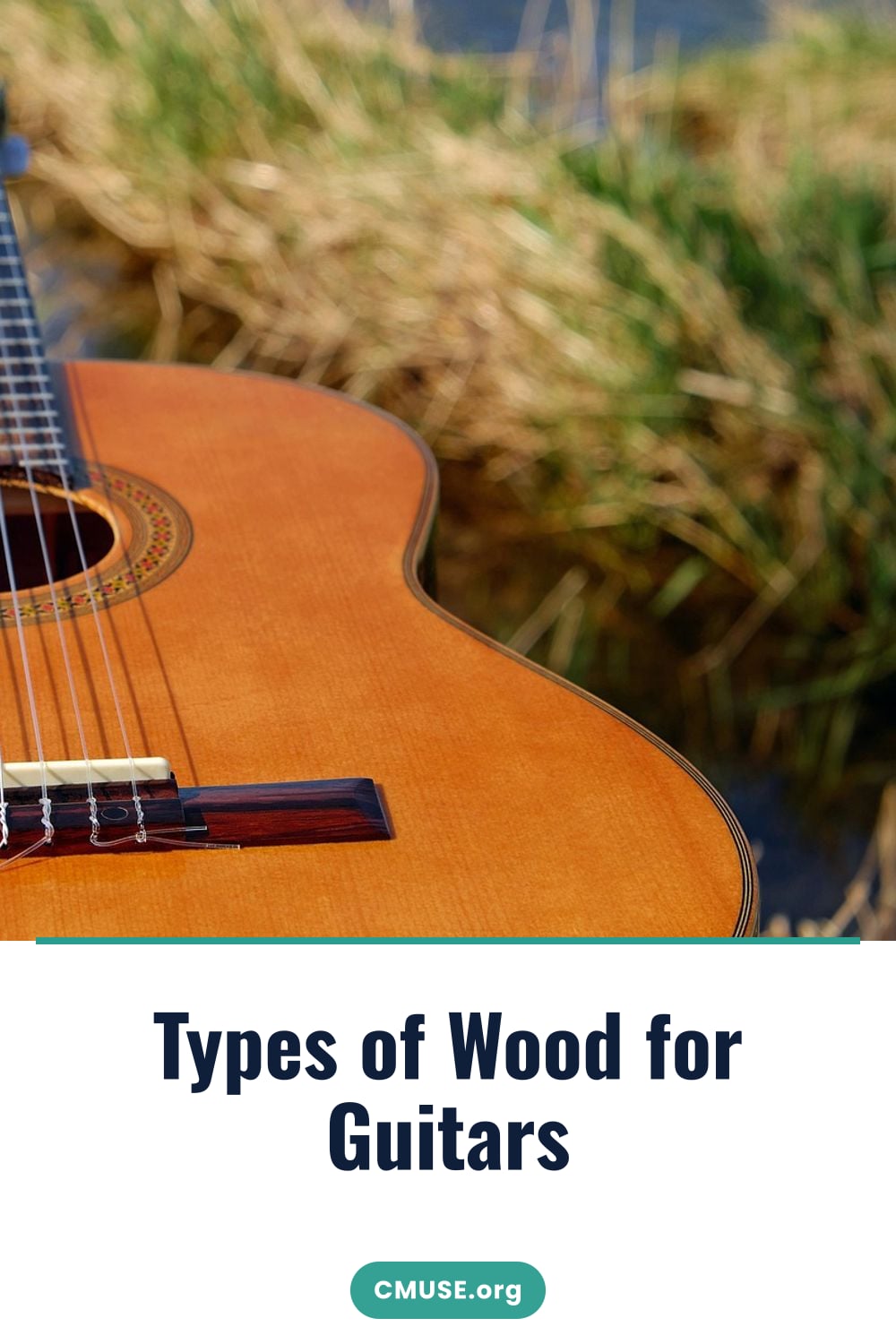
Spruce tops have been the gold standard on acoustic guitars since the Martin company popularized them in the 1800s. The wood is stiff yet light, which lets it respond quickly to the vibration of steel strings. You get strong projection and a clear high end that keeps definition even when you strum hard. Sitka spruce is the most common variety in modern instruments because it grows straight and tall in the Pacific Northwest, giving builders wide, knot-free boards.
Engelmann spruce runs a close second and tends to sound a touch warmer, which suits fingerstyle players who want a little silk around the treble notes. The tradeoff is that raw spruce guitars can sound almost too bright when brand new. Give them a few years of playing and the tone mellows into something balanced and lively.
That is exactly why many pros insist on pre-aged spruce tops whenever they can find them.
2. Brazilian Rosewood
Brazilian rosewood still wears the crown for back and sides on the very best acoustics. Its combination of high density and natural oils produces incredible sustain and a bass response that feels almost elastic. Notes bloom and then hang in the air longer than they do with almost any other wood.
The deep chocolate color streaked with black lines has become synonymous with vintage dreadnoughts that now sell for six figures. Supply problems ended legal harvesting decades ago, so genuine Brazilian now appears mostly in reclaimed form or on very high-end custom builds. The rarity only adds to the mystique.
Many players say the tone is worth the hunt, yet others argue that well-chosen Indian rosewood gets you eighty percent of the way there for a fraction of the price and legal headaches.
3. Indian Rosewood
Indian rosewood stepped in when Brazilian became scarce and quickly proved it was no mere substitute. Slightly less dense than its Brazilian cousin, it still delivers warm bass, sparkling treble, and excellent note separation. The grain is usually straighter and the color more uniform, which makes it easier for factories to work with at scale.
You will find it on everything from mid-priced Taylor and Martin models to handmade boutique instruments. The wood ages gracefully, darkening over time and gaining complexity in the midrange. If you want a guitar that sounds expensive without requiring a second mortgage, Indian rosewood backs and sides paired with a spruce top is a combination that rarely disappoints.
4. Mahogany
Mahogany brings an entirely different flavor to the conversation. The wood is lighter and softer than rosewood, which translates into a midrange-forward tone that feels intimate and vocal. Chords sound thick and rounded, single notes have a pleasing growl, and the overall volume is a bit lower than rosewood or maple.
That makes mahogany ideal for recording sessions where you do not want to fight the microphones. Genuine Honduran mahogany is the benchmark, though most modern guitars use African mahogany or sapele that share many of the same sonic traits. The open-pore grain and reddish hue give these guitars a vintage look that pairs beautifully with sunburst finishes.
If your playing style leans toward blues, folk, or roots music, mahogany will feel like it was grown specifically for you.
5. Maple
Maple is the bright counterpart to mahogany’s warmth. Hard and dense, it reflects sound rather than absorbing it, which produces a snappy attack, strong treble, and tight low end. You hear maple most often on electric guitar bodies and necks where sustain and clarity matter, but it also appears on some acoustic backs and sides when builders want extra cut and definition.
Figured maple, with its curly or quilted patterns, turns a simple instrument into wall art. The tradeoff is that maple can sound brittle or harsh if the top is not chosen carefully to balance it. Pair it with a cedar or redwood soundboard and the guitar gains sweetness that keeps the brightness from becoming tiring during long gigs.
6. Cedar
Cedar tops have earned a devoted following among fingerstyle players who prize quick response and rich overtones. Compared with spruce, cedar is softer and less stiff, so it requires less energy from the player to produce volume. Notes seem to pour out with very light touch, which explains why classical and flamenco guitars have favored it for generations.
The color is a warm reddish brown that darkens beautifully with age. Western red cedar is the most common choice in North America, though Spanish cedar sometimes appears on high-end classical models. The one real drawback is that cedar can wear out faster than spruce under heavy strumming, so aggressive flatpickers may find it less durable for their needs.
7. Walnut
Walnut sits in an interesting middle ground between rosewood and mahogany. It offers warm mids and strong bass like rosewood while adding a little of maple’s clarity on the high end. The chocolate-brown color with subtle streaks makes for handsome instruments that do not shout for attention.
Black walnut in particular has become popular with smaller builders looking for sustainable domestic woods that still deliver professional tone. Because it is harder than mahogany, walnut guitars project well without sounding boxy. The wood also tends to stabilize quickly after construction, which means less seasonal movement and fewer trips to the repair shop for neck resets.
8. Koa
Koa might be the most romantic wood on this list. Native to Hawaii, it grows with dramatic figuring that ranges from straight grain to wildly curly. The tone falls somewhere between mahogany and rosewood, warm yet articulate, with a natural compression that evens out dynamics nicely.
Ukuleles made from koa helped popularize the wood, but it now appears on steel-string acoustics that turn heads at every festival. The supply is limited and the best curly pieces command premium prices. Still, if you ever get the chance to play a koa guitar in a quiet room, the combination of visual beauty and singing tone explains why players fall in love on the spot.
9. Ebony
Ebony is rarely used for an entire guitar, but it plays a crucial supporting role. Its extreme density and tight grain make it perfect for fretboards, bridges, and sometimes headplates. The wood adds a subtle brightness and helps transfer string energy efficiently into the top.
Most players never think about the fingerboard species until they try an ebony board after years on rosewood and notice how the notes seem to snap into focus. African ebony is the current standard after traditional Indian sources became restricted. The jet-black look with occasional chocolate streaks also gives builders a chance to create striking visual contrasts on otherwise plain instruments.
10. Cherry
The last wood worth knowing well is cherry. Not the bright red stuff from your kitchen cabinets, but the softer, lighter American black cherry that builders have begun using for backs, sides, and even tops. It delivers a tone profile close to mahogany yet with a little extra shimmer on top.
The wood ages to a deep, glowing amber that looks better every year. Because cherry grows across the eastern United States, it represents a sustainable choice that supports local forestry. Players who want an instrument that feels alive and slightly different from the usual suspects often land here.
The grain is subtle, the weight is comfortable, and the voice is one you can live with for decades.
No single wood is universally best. Each brings strengths that shine in certain musical situations and tradeoffs that only become clear after you have played the guitar for a while. The real secret is matching the right combination of top, back, and sides to the way you play and the rooms where you perform.
Sit with a few different instruments, close your eyes, and listen for the voice that makes you lean in. That is the one worth taking home. After all, the best guitar is the one that keeps you playing long after the novelty of new wood has worn off.