
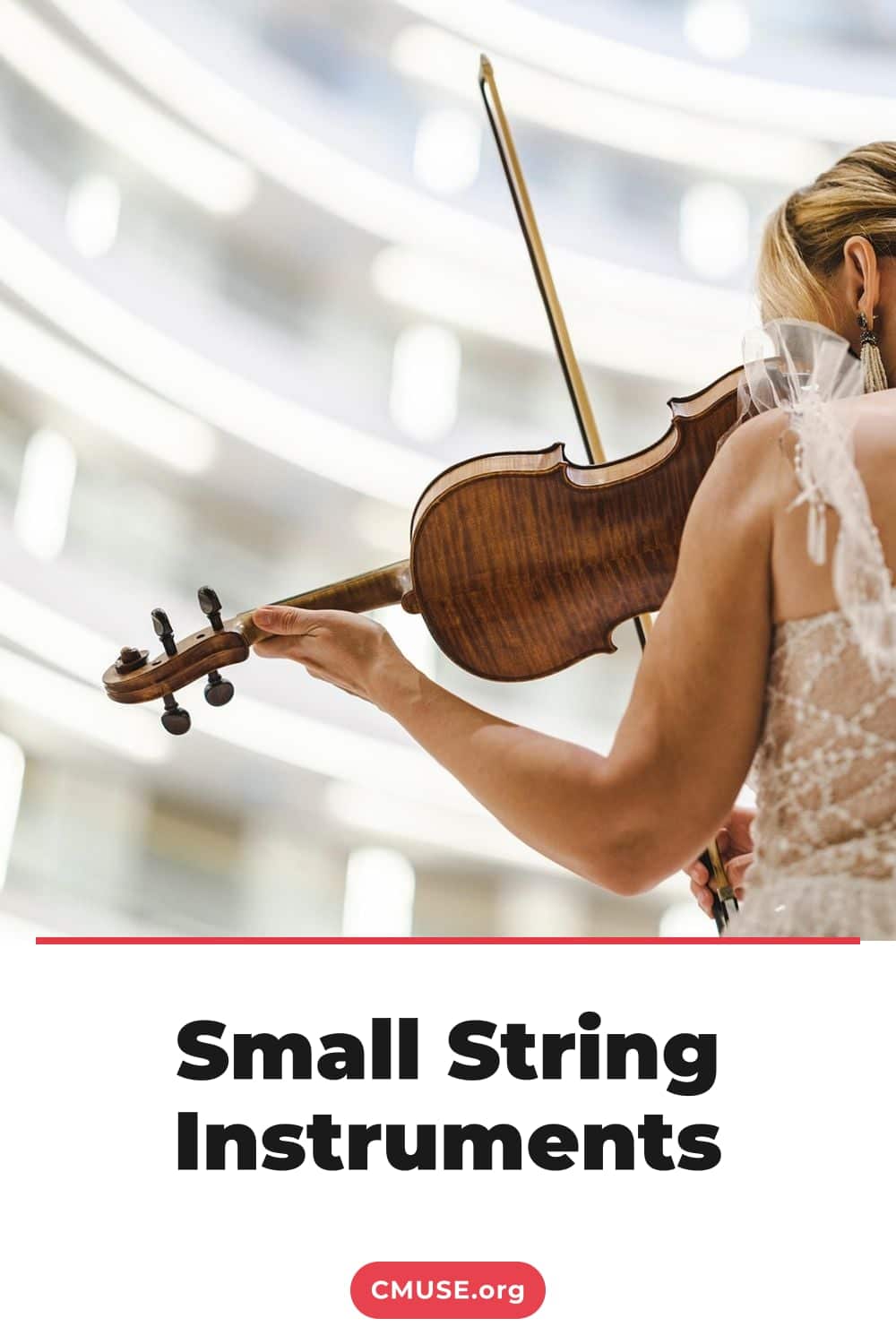
Small string instruments pack an outsized musical punch. They slip into a backpack, travel easily, and still deliver rich tone that can fill a room or cut through a noisy session. Yet many players overlook them, assuming bigger always means better.
The truth is these compact cousins of the violin and guitar open doors to techniques, repertoire, and sheer fun that larger instruments cannot match. Once you start exploring them, the question stops being whether you need one and becomes which ones deserve space in your life.
Portability alone explains part of their appeal. A musician who commutes by train or hops between open mics can keep playing without wrestling a full sized case. Beyond convenience, though, each small string instrument carries its own personality, history, and technical quirks.
Some favor speed and delicacy, others favor raw power in a tiny frame. Learning their differences helps you pick the right tool instead of settling for the first cute instrument that catches your eye. The following picks highlight instruments that reward both beginners and experienced players while offering distinct musical paths.
Top Small String Instruments to Explore
1. Violin
The violin leads the list for good reason. At roughly fourteen inches long, it remains the smallest standard orchestral string instrument yet produces a huge dynamic range. Its four strings are tuned in perfect fifths, which lets you cover wide intervals with tiny shifts of the hand.
That close spacing rewards precise intonation but also makes double stops and fast passagework feel natural once your fingers learn the map. Players often discover that the violin’s voice cuts through acoustic ensembles better than many larger instruments, which is exactly why it stars in everything from classical concertos to folk jams and modern indie recordings.
What surprises newcomers is how quickly a decent student violin reveals its strengths. Spend time with a well set up bridge and soundpost and the instrument starts to bloom with almost no extra effort. The tradeoff appears in the learning curve.
Because the violin has no frets, you develop ear and muscle memory simultaneously. That process feels slow at first, yet the reward is total freedom of expression. If you want one small string instrument that can tackle nearly any genre without apology, start here.
2. Mandolin
Next comes the mandolin, an eight string powerhouse that looks like it wandered out of an Italian workshop and never left. Two courses of paired strings give it a bright, chiming attack that no single string instrument can duplicate. The high tension and short scale length, usually around thirteen inches, produce lightning fast response.
Bluegrass players exploit that speed for rapid tremolo and cross picking, but the mandolin also shines in Celtic sessions, early music, and even jazz when amplified.
Its compact body sits comfortably on the lap during long rehearsals, and the doubled strings forgive minor intonation slips that would scream on a violin. Still, the mandolin demands strong right hand technique. Without clean picks and controlled volume between courses, the sound turns into a jangly mess.
Master the basics and you gain an instrument that projects over guitars and fiddles alike, making it the secret weapon of many acoustic bands.
3. Ukulele
The ukulele earns its spot through sheer accessibility and surprising depth. Most players begin with the soprano size, whose thirteen inch scale feels like a toy until you hear its warm, ringing tone. Four nylon strings tuned GCEA create simple chord shapes that even total beginners can form within minutes.
That instant gratification explains why the ukulele became a gateway instrument for so many adults who thought music had passed them by.
Yet the ukulele is far more than a novelty. Jazz players explore its reentrant tuning for intricate chord melodies that would tangle on a guitar. Hawaiian musicians draw liquid legato lines that mimic the human voice.
The small body encourages a relaxed posture, which reduces tension and lets you play for hours. The main limitation surfaces when you try to perform in loud environments without amplification. Pair it with a clip on pickup, however, and the ukulele holds its own in almost any setting.
4. Charango
Few instruments match the pure charm of the charango. This Andean five course instrument, traditionally built with an armadillo shell back, measures about twenty five inches yet feels even smaller in the hands. Its nylon strings and bright, dry tone cut through outdoor festivals with remarkable clarity.
The charango’s reentrant tuning, with the second course lower than the first, gives melodies an immediate, almost vocal quality that feels hypnotic after a few bars.
Modern makers now use wood backs to satisfy conservation laws, but the playing technique remains the same. You hold it high on the chest like a small guitar and fret with the thumb wrapped around the neck for support. The charango rewards quick arpeggios and syncopated rhythms drawn from South American folk styles.
Its primary drawback is limited volume compared with louder small instruments, yet that gentle voice becomes an asset in intimate acoustic settings where subtlety matters more than projection.
5. Octave Mandolin
The octave mandolin sits halfway between mandolin and cittern, offering a deeper, richer voice while keeping the same eight string layout. Tuned an octave below the standard mandolin, it delivers warm mid range tones that blend beautifully with guitars and bouzoukis. The longer scale, usually twenty inches, stretches the fretting hand slightly but opens up wider intervals and fuller chords.
Irish session players love it for its ability to provide both melody and rhythmic backup without stepping on the fiddle’s toes.
Because the strings sit farther apart than on a regular mandolin, the octave version feels more forgiving for players with larger hands. The tradeoff arrives in speed. You cannot quite match the lightning runs possible on a shorter scale instrument, yet the singing sustain more than compensates during slow airs.
If you already own a mandolin and crave a lower voice that travels in the same case, this is the logical next step.
6. Cittern
The cittern, or its close cousin the bouzouki in Irish tuning, brings a different flavor to the small string family. Five courses of metal strings on a twenty four inch scale produce a crisp, ringing sound that fills pub sessions without amplification. The flat back and carved soundboard give it excellent projection, while the extra courses allow lush chord voicings that sit between guitar and mandolin.
Players often tune it GDAD or GDAE, choices that make scales fall easily under the fingers once you learn the patterns.
Its steel strings require stronger fingers than nylon instruments, and the sustain can overwhelm delicate melodies if you do not mute carefully. Still, the cittern’s ability to switch between driving rhythm and intricate counterpoint makes it invaluable in traditional music circles. Many players discover that the instrument’s bright attack encourages new compositional ideas they never found on larger guitars.
7. Pocket Violin (Pochette)
The final instrument on this list might be the most surprising: the tiny pocket violin, sometimes called a pochette. Designed originally for dance masters in the eighteenth century, these miniature fiddles measure barely twelve inches yet play in standard violin tuning. The extremely short string length forces precise bow control and rewards a light touch.
Traveling musicians carried them in coat pockets between villages, proving that music making never needed to stop for lack of space.
Modern versions often use carbon fiber or dense woods to maintain tone despite the tiny body. They will never match the volume or richness of a full sized violin, but they excel at quiet practice, travel, and historical performance. The pochette reminds every player that size is no guarantee of musical worth.
Sometimes the smallest voice carries the most memorable story.
Each of these instruments proves that musical satisfaction does not scale with physical dimensions. What matters is matching the tool to your hands, your ears, and the music you want to make. Start with whichever one sparks curiosity, then let the others follow as your tastes evolve.
Before long you will find yourself surrounded by cases that look like they belong to a child yet contain sounds big enough to move an audience. The smallest strings often sing the loudest in the end.