
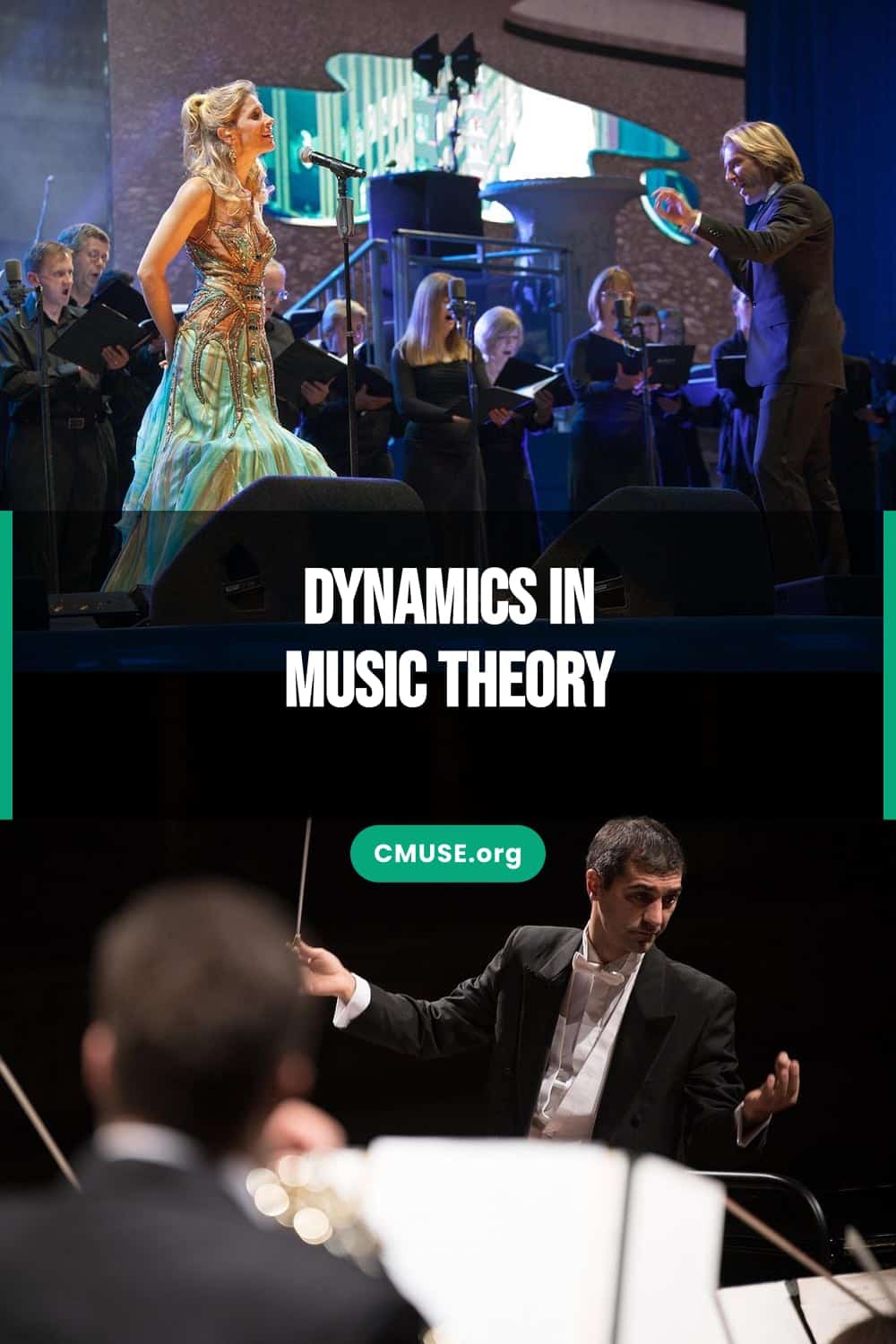
Dynamics shape the emotional journey of every piece of music. They are the quiet swells and sudden crashes that make a simple melody feel alive. Without them, even the most sophisticated composition sounds flat.
Mastering dynamics turns good players into expressive ones because it is not just about volume. It is about intention, contrast, and knowing exactly when to pull back or push forward.
The stakes are higher than most beginners realize. A singer who never varies volume loses the room in under a minute. A guitarist who plays every solo at maximum intensity leaves no room for the chorus to hit harder.
Dynamics give music its breath, its punctuation, and its sense of drama. Once you start listening for them, you hear their fingerprints everywhere from Beethoven to Billie Eilish. The good news is that the core concepts are straightforward.
You just need a clear map of the main tools and how they actually behave in practice.
Essential Tools for Controlling Musical Dynamics
1. Volume Changes
Volume changes are the most obvious place to begin. Composers have used Italian terms for centuries to mark these shifts with precision. The basic set runs from pianissimo (very soft) through piano, mezzo-piano, mezzo-forte, forte, and fortissimo (very loud).
These six steps form the foundation, yet the real skill lies in how smoothly or abruptly you travel between them. A gradual crescendo over eight bars feels like sunrise. A sudden forte-piano stab feels like a door slamming.
Both are valid. Both belong in your toolkit.
2. Crescendo and Diminuendo
Crescendo and diminuendo are the workhorses of musical movement. A crescendo does not simply mean “get louder.” It means “grow.” The best performers shape the increase so the peak arrives exactly where the harmony or lyric demands it. Think of the slow build in the chorus of “Bohemian Rhapsody.” The band does not jump from piano to forte.
They ride a long, controlled crescendo that makes the arrival feel inevitable. The opposite holds for diminuendo. Pulling volume away at the end of a phrase can create an elegant sigh or a haunting question mark.
The trick is matching the rate of change to the emotional content. A fast swell suits excitement. A slow fade suits reflection.
3. Sudden Dynamic Accents
Sudden dynamic accents give music its bite. The sforzando, marked sfz, is a sharp punch on a single note or chord. It is the musical equivalent of italics or a raised voice.
Used sparingly it wakes the listener up. Used constantly it loses all power, which is exactly why many young ensembles sound frantic. The accent mark (>) is gentler, a quick emphasis that still respects the surrounding volume.
These tools matter because they create contrast inside a single dynamic level. You can stay at forte the whole time yet still shape the line with well-placed accents. That internal variety keeps the music breathing.
4. Terraced Dynamics
Terraced dynamics come from the Baroque era and still sound powerful today. Instead of smooth ramps, the music jumps from one steady volume plateau to another. You play piano for sixteen bars, then snap to forte for the next sixteen.
The effect is architectural, like walking from a shaded courtyard into bright sunlight. Bach and Vivaldi loved this approach because it suits the clean lines of counterpoint. Modern minimalists sometimes borrow the same idea, leaping between dynamic levels to create a sense of structure without traditional crescendo marks.
The challenge is making those jumps feel intentional rather than clumsy. Good players prepare the ear with tiny swells right before the change so the terrace feels earned.
5. Hairpins
Hairpins are the visual cousins of crescendo and diminuendo. On the page they look like two converging or diverging lines, hence the nickname. What matters is not the symbol but the psychology behind it.
A crescendo hairpin that lasts only two beats creates urgency. The same symbol stretched across twelve beats creates a sense of vastness. Context decides everything.
In a string quartet the second violin might play a gentle hairpin while the cello holds steady. That micro-contrast inside one chord can make the harmony shimmer. It is a small thing, but it matters.
6. Forte-Piano Markings
The fp marking, forte-piano, is one of the most dramatic tools available. Hit a note or chord loud and then drop instantly to soft. The effect is theatrical, like a flash of lightning followed by sudden darkness.
Mozart used it constantly in his piano sonatas to mimic the natural decay of the instrument while still surprising the ear. In rock music the same idea appears when a distorted guitar chord is struck hard and then the volume pedal is rolled down. The technique works because it compresses a huge dynamic range into a single attack.
It also teaches control. Most students can play loud or soft. Far fewer can do both in the space of one quarter note.
7. Subito Markings
Subito markings add shock value at any volume. Subito piano means “suddenly soft.” Subito forte means the opposite. These directions test a musician’s reflexes and taste.
Execute them too early and you telegraph the surprise. Execute them too late and the moment passes. Orchestral conductors often rehearse subito changes separately because the temptation to creep toward the new dynamic is almost irresistible.
Yet when done cleanly the effect is electric. A subito piano in the middle of a loud passage feels like the floor dropping out. That jolt is precisely why the technique earns its place on any serious list.
Beyond the Italian vocabulary lies a more subtle world of relative dynamics. A forte in a delicate flute solo is nowhere near as loud as a forte in a brass fanfare. Context always redefines the absolute decibel level.
This is why recordings can be misleading. A producer might ride the faders to make every marked forte equally loud, but live performers must constantly adjust to the acoustics of the room, the size of the ensemble, and even the fatigue of their own muscles. The best players develop an internal gauge that feels the music’s architecture rather than simply obeying the printed marks.
That internalized sense separates mechanical execution from genuine musicality.
8. Dynamic Balance
One advanced concept deserves special mention. Dynamic balance between multiple voices is its own art. A melody at mezzo-forte can still be drowned by an accompaniment marked piano if the pianist uses too much pedal or the violist plays with a heavy bow.
The solution is not always to lower the accompaniment. Sometimes the melody needs a brighter attack or a slight crescendo on its highest note. These micro-adjustments happen in every rehearsal yet rarely appear in the score.
They prove that dynamics are not absolute instructions. They are negotiations between players, instruments, and the space itself.
All these tools ultimately serve one purpose. They create a hierarchy of importance inside the music. Loud moments feel important because softer ones surround them.
Sudden changes draw the ear to a particular line. Gradual shifts guide the listener through an emotional arc. When you master the palette you stop thinking about volume as a separate category.
It becomes part of phrasing, part of rhythm, part of storytelling. The quietest passage in a symphony can feel more intense than the loudest if the contrast is right.
Start experimenting with these ideas at the piano or with your voice. Pick a simple folk tune and play it six times, each with a different dynamic plan. Notice how the same notes can suggest contentment, rage, nostalgia, or triumph simply by reshaping the volume curve.
The instrument does not change. Your control of dynamics does. That discovery is where real musicianship begins.
Return to the opening thought. Music without dynamics is like speech delivered in a monotone. It conveys information but never emotion.
Once you learn to shape sound with intention the same old scales and chords start telling stories. The tools have been around for centuries yet they remain fresh in every new pair of hands. Pick one concept from this list, apply it tomorrow, and hear the difference for yourself.
The music has been waiting for you to speak its volume.