Minimalist Phasing Offset Calculator
Calculate loop drift, tempo-delta offset growth, target phase hits, and full-cycle alignment for interlocking minimalist patterns.
| Preset | Loop Shape | Typical Delta | Best Readout |
|---|---|---|---|
| Piano Phase Tight | 12 beats at 120 BPM | 0.25 to 0.60 BPM | Slow offset growth |
| Clapping Eighth Shift | 12 beats at 96 BPM | Manual eighth target | Target phase time |
| Marimba Slow Bloom | 24 beats at 84 BPM | 0.15 to 0.35 BPM | Full return time |
| Synth Cell Microshift | 16 beats at 132 BPM | 3 to 9 cents | Drift per loop |
| Mode | Input Meaning | Example at 120 BPM | Use Case |
|---|---|---|---|
| BPM difference | Direct tempo spread | 0.50 means 120.50 BPM | Metronome or DAW tempo lanes |
| Percent difference | Ratio against source | 0.50% means 120.60 BPM | Turntable or sampler rate drift |
| Tempo cents | Pitch-style tempo ratio | 7.2 cents is about 120.50 BPM | Fine varispeed adjustment |
| Reverse sign | Moving part slower | Behind drift subtracts delta | Negative phase movement |
| Phase Target | Offset Position | Musical Feel | Check With |
|---|---|---|---|
| 12.5% | One eighth of loop | Small shimmer | Near 32nd-note nudges |
| 25% | One quarter of loop | Clear displaced echo | Sixteenth or eighth grid |
| 50% | Half loop | Mirror-like opposition | Bar midpoint accents |
| 100% | Full loop return | Realignment | Downbeat coincidence |
| Pattern Type | Input Length | Tempo Zone | Phasing Detail |
|---|---|---|---|
| Short pulse cell | 8 beats | 112 to 144 BPM | Fast full-cycle returns |
| Three-bar cell | 12 beats | 88 to 132 BPM | Balanced drift timing |
| Long mallet cell | 16 to 24 beats | 72 to 108 BPM | Slow audible unfolding |
| Extended tape loop | 30 to 64 beats | 60 to 96 BPM | Wide return intervals |
Manually phasing two loops is where the panic starts to set in. Initially you get both loops going and they line up for a couple of bars, one then lags ever so slightly. It’s barely noticeable but over time, the rhythmic tension mounts rapidly. It either becomes unbearable or stays unresolved for too long.
In this instance, intuition does not beat calculation. While phasing math is simple, there is no deviations from the equation. Each repetition builds up tiny differences in tempo. What began as a slight offset become a complicated rhythm that will ruin your performance if you do not carefully plan the return point.
How to Plan Your Loop Timing
That’s the tempo difference: the variable in the equation. It represent the difference between what moves and what doesn’t. A half-beat-per-minute change can seem insignificant, yet it isn’t. That little change define the whole structure of the piece.
With an eight-beat cell as short as that, even a modest tempo difference result in rapid cycling through the loops, creating a fast textural effect. With a longer sixteen-beat pattern, same delta induces a slow drift. One full cycle require many minutes to complete.
No need to guess any coefficients; simply plug your delta into calculator along with your loop length. It do the math for you. It converts idea of changing BPMs into real time offsets. You’ll instantly know when patterns will align.
To begin with, you must select correct initial offset. Zero alignment is a good start, but a small delay grabs attention right away. Don’t be afraid to let it build naturaly over time. Alternatively, you can feed in a starting millisecond offset using the tool. You can also get an exact phase relationship immediately if you want.
How much tolerance do you have for aligning? For example, maybe you are working in a studio where accurate re-alignment need to happen within ten milliseconds. Maybe you’re on stage performing alongside musicians and your timing needs to allow for forty milliseconds or more as humans is all different. By adjusting this setting correctly the calculated return time will show what is happening.
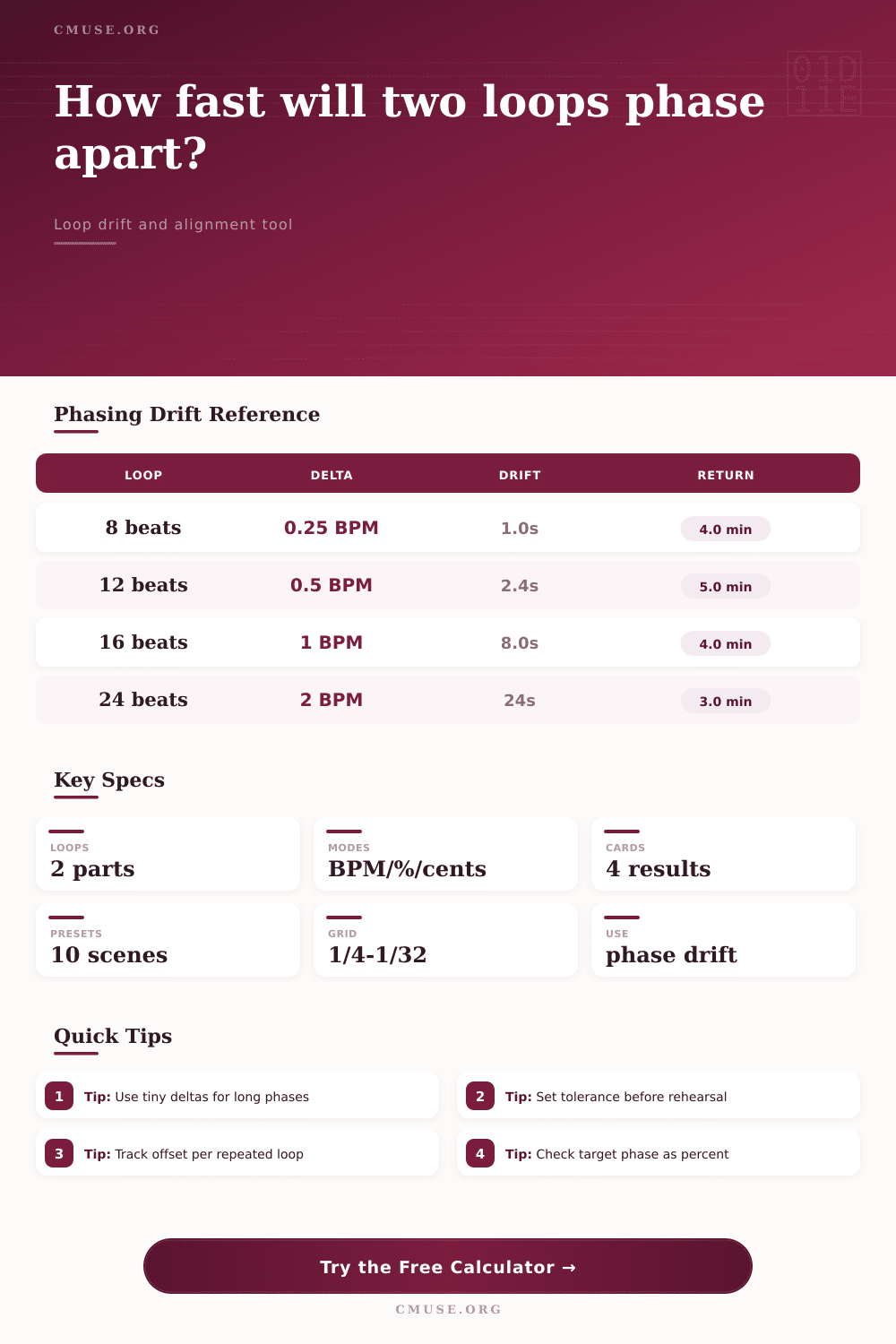
As the table of references shows, loop length combined with tempo delta make all the difference. A twenty four beat marimba cell at 84 BPM is not going to behave the same as a twelve beat loop at 120 BPM. One establishes tight rhythms which resolve frequently while other one builds tension over time. Consider this trade-off when choosing between a longer structure or immediate complexity.
Too many musicians overlooks timing and concentrate only on the melody. This leads to a muddled mix where accents do not resolve well but clash with each other. The app also lets you experiment with other subdivision grids and match those offsets to your rhythmic intent. Steady alignment to quarter notes will keep you in step while finer tuning to sixteenth notes provide more flexibility. It is handy if you’re setting tap tempos on synths or sequencing through drum machine.
The app has some preset scenes for typical minimalistic styles. These include everything from slow tape loop drifts to tightly phased pianos. It give you a starting point without having to begin from scratch. Note: these aren’t random scenes; they reflect proportions that generate pleasing phase relationships. So once you get started using them, you’ll know what’s solid underfoot and can tune your parameters comfortabley.
Phasing is all about time control. Adding calculated error to a perfect system controls how we perceive rhythm. It’s precise and takes some patience but the result is textural richness. This richness comes from machines yet sounds organic.
Once you know when the phase cycle completes and what the drift per loop is, you no longer fight against the timing. Instead, you begin to use it as an instrument. Where the phase gradually separates become a compositional tool instead of a technical one. Now you precisely know where the next accent will align and can build the rest of your composition around these moments of resolution.
Planning out offsets ahead of time eliminates the angst. There’s no “will-they-come-back-together-or-won’t-they” question. Phasing happens on purpose rather then by chance. Having the numbers at hand means having the freedom to do whatever you want with live performance, or with tape machines or digital audio workstations.
Because you have the safety net down, you can go faster or slower, you could of stretch things out or push the differences in tempo harder. The tempo delta and loop length becomes your levers. Use them well and what emerges is a natural evolution of sound that flows smoothy over time.