
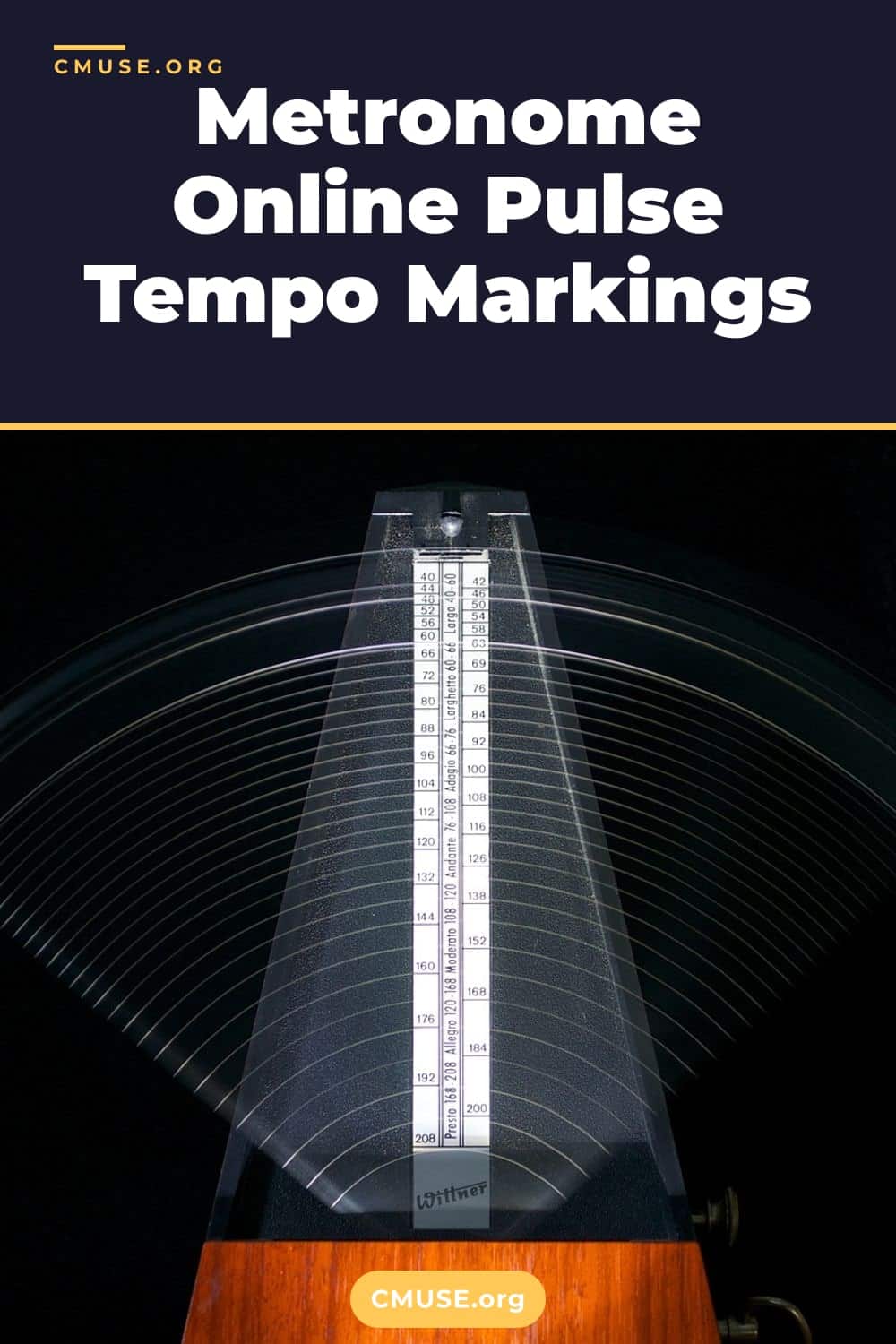
The steady click of a metronome has guided musicians for over two centuries, yet most players still treat those tempo markings as mysterious code. You see “andante” or “allegro” at the top of a piece and wonder whether the composer expected a stroll or a sprint. Online tools have changed the game by letting anyone dial in exact beats per minute, hear the pulse instantly, and compare interpretations side by side.
Understanding the common tempo markings turns those abstract Italian words into practical decisions about feel, energy, and expression. Once you know what each marking really asks for, your playing gains both freedom and precision.
The markings themselves form a loose hierarchy that runs from sleepily slow to furiously fast. Composers chose them to communicate character as much as speed. A handful of terms appear again and again in sheet music from Bach to pop charts, each carrying centuries of performance tradition.
The list below walks through the most important ones, showing where they sit on the beats-per-minute spectrum, what they feel like in practice, and when a particular marking unlocks the right mood for a piece. These are the terms you will meet first and return to most often.
Common Musical Tempo Markings Explained
1. Grave
Grave sits at the bottom of the tempo ladder, usually between 20 and 40 beats per minute. The word literally means solemn or serious, and the music that carries this marking tends to move with the weight of a funeral procession. Think of the opening measures of Beethoven’s Piano Sonata No. 8, the Pathetique.
At this pace each chord feels like its own event. You have time to shape every dissonance before the next one arrives. Online metronomes reveal how narrow the margin is here.
Drop ten clicks slower and the music dies. Push ten clicks faster and the gravity evaporates. Grave is not background music.
It demands complete presence from both player and listener.
2. Largo
Largo follows close behind, roughly 40 to 60 beats per minute. It suggests breadth and expansiveness rather than the crushing solemnity of grave. Many singers first meet largo in Handel’s “Largo” from Xerxes, where the melody unfolds like a long sunrise.
The pulse is still slow enough that you can savor each interval, yet it moves forward with a quiet dignity. This is the tempo where breath control becomes critical for wind players and vocalists. Online tools let you test how much rubato the line can bear before the structure sags.
Too much and the largo turns into molasses. The right amount and the music breathes like a living thing.
3. Adagio
Adagio occupies the sweet spot between 66 and 76 beats per minute for most performers. It is the territory of famous second movements, from the Adagio of Mozart’s Clarinet Concerto to the aching Adagio for Strings by Samuel Barber. At this range the music feels unhurried without being static.
You can shape long phrases and still maintain a sense of direction. Many students underestimate how physical adagio can be. Your bow arm or breath support must stay engaged for what feels like forever.
Modern online metronomes often include a tap function so you can set the exact pulse of a favorite recording and then practice matching it. The exercise teaches that adagio is less about slowness and more about sustained intensity.
4. Andante
Andante earns its name from the Italian for “walking.” Expect 76 to 108 beats per minute, a comfortable stride that covers ground without rushing. This is the default tempo for countless hymns, folk songs, and middle movements that need to feel human and relatable. Andante is forgiving for beginners because small variations in speed still sound musical.
Yet professionals prize it for exactly the opposite reason: the margin for expressive nuance is enormous. You can lean into a phrase, hesitate for a split second, then catch up, all while staying inside the walking pulse. Online practice apps shine here because they let you lock the beat and then experiment with how much freedom the line can tolerate before it stops walking and starts running.
5. Moderato
Moderato refuses to be pinned to one emotion. It lives between 108 and 120 beats per minute and asks for a balanced, moderate delivery. You will see it atop sonata movements, etudes, and jazz standards that need forward momentum without aggression.
The beauty of moderato is its flexibility. It can sound elegant in a Mozart sonata or driving in a mid-tempo rock ballad. The trick is remembering that moderato never means mediocre.
It means “find the natural center of this music and stay there.” Online metronomes help you resist the universal temptation to creep faster as the energy builds. Keeping strict moderato often reveals hidden counter-melodies that disappear when players rush.
6. Allegretto
Allegretto offers a subtle but important step up, sitting around 112 to 120 beats per minute with a light, lively character. It is faster than moderato yet not quite urgent. Think of the second movement of Beethoven’s Seventh Symphony or many Mendelssohn scherzos.
The diminutive ending on the word hints at its personality, a little allegro, a playful cousin. This tempo rewards crisp articulation and buoyant rhythm. String players use light bow strokes here.
Pianists keep their wrists loose. Online tools let you compare allegretto performances across decades. You quickly notice that the best ones never sound mechanical even when the metronome is clicking steadily in the background.
7. Allegro
Allegro is the heartbeat of Western music, the marking that dominates concertos, symphonies, and sonata finales from Vivaldi onward. The range runs from 120 to 168 beats per minute, though most performers settle between 132 and 144 for comfort. Allegro means cheerful, and the best interpretations keep that optimism even at breakneck speed.
This is where technique gets tested. Scales, arpeggios, and passagework that felt easy at moderato can turn treacherous when the metronome nudges past 140. The online advantage is instant feedback.
You can start at a safe 120, record yourself, bump the tempo five clicks at a time, and hear exactly where tension creeps into your sound. Allegro teaches that speed is the byproduct of clarity, not the goal.
8. Presto
Presto clears the field at 168 to 200 beats per minute and asks for genuine virtuosity. The music hurtles forward with exhilarating energy. Listen to the finale of Mozart’s Piano Sonata in C minor or any Vivaldi summer storm and you feel the wind in your face.
At these speeds the metronome becomes a merciless coach. Miss one sixteenth note and the whole line can derail. Online versions with subdivision clicks help because they outline the smaller rhythmic grid inside the fast pulse.
The best players at presto are not simply fast. They are relaxed enough that the tempo feels inevitable rather than forced. That relaxation only comes after hours spent with the click.
9. Prestissimo
Prestissimo is the rarest and fastest marking, anything north of 200 beats per minute. Very few pieces wear this label because the practical limits of human hands and instruments come into sharp focus. When you do encounter prestissimo, usually in a daredevil coda or encore piece, the effect is superhuman.
Chopin’s shortest preludes occasionally flirt with this zone. So do certain bluegrass breakdowns when transferred to classical guitar. Online metronomes reveal that prestissimo is less about counting every click and more about maintaining rhythmic integrity while the tempo blurs.
The pulse stops being a series of separate beats and becomes a continuous stream of energy. Only the most confident players should chase these numbers. Everyone else can admire them from a safe distance.
The real power of any tempo marking appears only when you stop treating it as a rigid command and start hearing it as an invitation to character. A grave that feels like mud is wrong even if the metronome reads 35 beats per minute. An allegro that sounds brittle and panicked is equally wrong at 160.
Online tools give you the numbers, but your own ears, hands, and musical instincts still choose the precise flavor of each pulse. The click is a map, not the territory. Learn the common markings until they become second nature, then spend time bending them slightly in both directions while the metronome keeps you honest.
That interplay between discipline and freedom is where real music making begins. The next time you open a score and see an unfamiliar Italian word above the staff, remember it is not a test. It is a conversation starter between you, the composer, and that steady, patient click.