Mashup Tempo Match Calculator
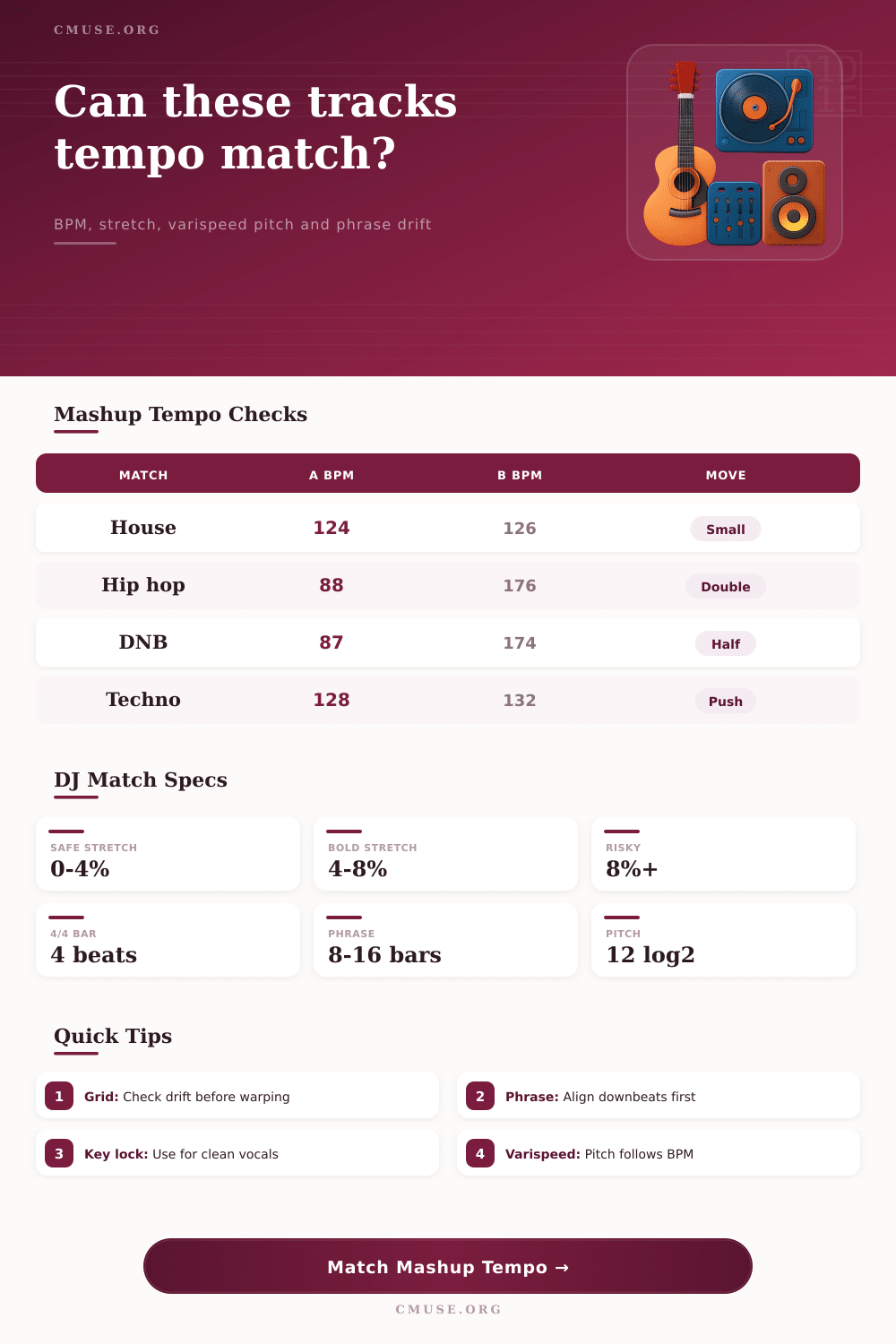
Compare track A and B BPM, half-time and double-time interpretations, stretch percent, varispeed pitch shift, beat-grid drift and phrase alignment for DJ edits and mashups.
Calculation Breakdown
| Deck | Original BPM | Grid Mode | Adjusted BPM | Stretch | Pitch Shift |
|---|---|---|---|---|---|
| Calculate to compare the two tracks. | |||||
| Phrase Point | Target Bar | Start Time | Track B Offset Fix | DJ Cue Note |
|---|---|---|---|---|
| Calculate to build phrase cue points. | ||||
| Entered BPM | Half-Time Grid | Normal Grid | Double-Time Grid | Common Use |
|---|---|---|---|---|
| 70 BPM | 35 BPM | 70 BPM | 140 BPM | Trap vocals over pop or dance tempos |
| 87 BPM | 43.5 BPM | 87 BPM | 174 BPM | Half-time hooks against drum and bass |
| 96 BPM | 48 BPM | 96 BPM | 192 BPM | Latin or pop edits with double-time percussion |
| 128 BPM | 64 BPM | 128 BPM | 256 BPM | Club grid, loops and four-bar phrases |
| Stretch Range | Tempo Move | Pitch If Varispeed | Grid Risk | Best Material |
|---|---|---|---|---|
| 0-2% | Transparent | About 0.35 st | Low | Full mixes, vocals, drums |
| 2-4% | Noticeable check | About 0.70 st | Low-medium | Clean stems and short blends |
| 4-8% | Creative push | About 1.35 st | Medium | Loops, drums, filtered sections |
| 8%+ | Heavy change | 1.35 st plus | High | Special effects or rebuilt edits |
The instrumental beats along but seem as if they’re dragging their feet while vocal track is screaming with energy. You look at the screen and see tempo numbers aren’t matching up and suddenly for a moment you get all panicky. That’s what happens when you encounter classic dilemma of the mashup.
Spinning two records together isn’t enough; you have to make two different musical realities exists in the same space without one or both sounding like they are fighting each other. Once you input your tempos into calculator above, it does the math so you won’t have to guess anymore: Is a slight BPM difference something you can handle? Or is it a potential train-wreck waiting to happen?
How to Mix Two Songs Together
“The issue with most novices is that they look at beat-per-minute figure alone, like that’s the whole picture. It isn’t. Two tracks that has different beats per minute, such as a 124 BPM house track and a 126 BPM one, are close enough to manually blend together with a little bit of pitch adjustment. But that’s only assuming they’re both in typical four-four grid. If one is seen as being half-time then the whole equation change. This is where the tool ask you what you perceive the time feel to be. You may believe that you’re blending two similar things when in fact one sits on a different rhythmic pulse entirely, so the grid will quickly start to drift away from each other. The chart on the page makes this clear showing that vastly different underlying tempos can mask themselves behind a double-time or half-time interpretation.
There’s an intersection between engineering and art when it comes to stretch percentage. Generally speaking we can get away with warping audio by a percent or two before it becomes noticeable to human ear, particularly while using key lock to maintain the pitch. So we’re able to make a change in tempo without altering tonal center. But when we push it past eight percent, we begin to hear glitches. Snap dissapears from the drums. Vocals become as though they’re sliding across ice. Your calculator will tell you exactly where line gets crossed for your particular blend. It will let you know if you need to stretch to be safe, bold, or risky. That makes the difference between a messy mix and a polished one; it’s knowing when you are making a creative choice versus just having broken audio file.
It all changes with Varispeed If you like that organic kind of pitch shift as you slow your record down on turntable or cassette then there is one other thing you must consider: Key changes. When you engage the varispeed mode the tool automaticly calculates how much it has shifted in semitones. Why does this matter? Because if you go into a song and drop it two percent it will drop slightly in pitch too. You may get away with hiding small stretch here or there, but a noticeable pitch drop can throw off vocal harmonies or make instrument sound out of tune with each other. It’s a tradeoff you should of account for before mixing.
The last boss of tempo matching is phrase alignment. Even with dead-on BPM sync, you might not be lining up the downbeats. A mashup will fall flat if the drop fades out as chorus hits. To calculate how many bars one track must lead or lag in order to hit that shared moment of musical climax, use the phrase offset input. Concrete bar counts replaces abstract timing. You’ll know right where to cue your intro so that both tracks land on same musical breath.
There is no magic formula for good taste. The numbers come from calculator but they’re not going to help you decide whether the two songs matches on an emotional level. That’s still your judgment call. Let the data tear down the technical barriers, and rely on your ears to determine if the vibe fits. If the grids lock tight and math checks out, all that’s left to do is listen to the music.