
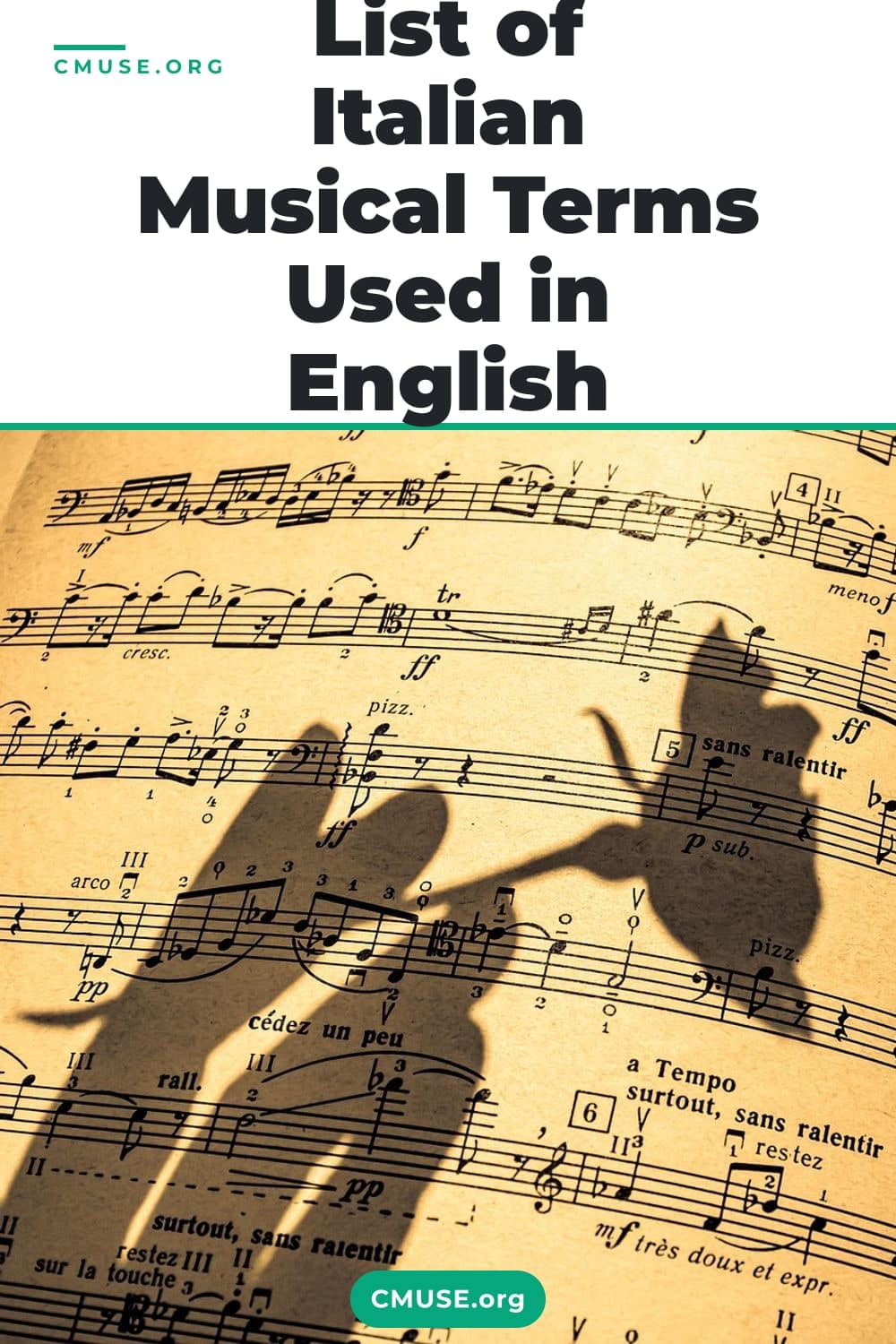
When you sit down with a score or listen to a classical concert, the page fills with Italian words that somehow feel familiar even if you have never studied music. Tempo, crescendo, legato. These terms crossed from the studios of Rome and Florence into English sheet music centuries ago and never left.
They are not decoration. They are precise instructions that tell performers exactly how to shape a phrase, control volume, or shift speed. Learning them turns passive listening into active understanding.
You start to hear the composer’s intentions instead of just the notes.
The Italian language dominated European music during the Baroque and Classical periods because Italy produced the first orchestras, opera houses, and star composers. French, German, and English musicians adopted the vocabulary the way scientists adopted Latin: it was already there, it was exact, and everyone agreed on its meaning. That shared vocabulary is why a pianist in Tokyo and a conductor in Berlin can pick up the same piece and know what “piano subito” demands without a single word of translation.
The list that follows gathers the terms you will meet most often in English-language scores, arranged so the everyday ones come first and the more specialized ones later. Each reveals something about how music actually works.
Common Italian Musical Terms You Should Know
1. Allegro
Allegro is the first word most beginners encounter, and it carries more nuance than its common translation suggests. It means cheerful or lively, yet in practice it sets a tempo between 120 and 168 beats per minute. When Beethoven writes “Allegro con brio” he is not simply asking for speed.
He wants brightness and spirit delivered at that brisk pace. You feel the difference immediately when a player ignores the “con brio” part and simply races through the notes. The music loses its personality.
Allegro reminds you that tempo markings were never just metronome settings. They were emotional instructions first.
2. Andante
Andante sits at the opposite end of the emotional spectrum yet gets misused just as often. Literally “walking,” it suggests a moderate, flowing pace that matches a calm human stride. Composers use it when they want thoughtfulness without dragging.
Mozart’s andante movements often feel like quiet conversations between instruments. Play them too slowly and the conversation turns into a lecture. The term teaches you that speed and character are permanently linked.
Change one and you change the other.
3. Crescendo and Diminuendo
Crescendo and diminuendo form the pair that controls the music’s breathing. Crescendo does not simply mean “get louder.” It means “growing,” a gradual increase that can last two bars or twenty. The tension comes from not knowing exactly when the peak will arrive.
Diminuendo reverses the process, a controlled shrinking that can suggest retreat, tenderness, or exhaustion. When both appear in quick succession you witness the dynamic contour that makes a phrase feel alive rather than mechanical. Many amateur players treat these marks as on-off switches.
The professionals treat them as curves.
4. Legato and Staccato
Legato and staccato dictate how notes touch one another or deliberately refuse to. Legato, meaning “bound together,” instructs the performer to connect notes so smoothly that the sound seems uninterrupted. A violinist slides between pitches with the bow, a pianist overlaps finger strikes, a singer carries the vowel sound across.
Staccato, by contrast, shortens each note and leaves tiny silences between them. The result is lightness or urgency depending on context. These two terms show how articulation changes emotion more than volume or speed ever could.
A sad melody played staccato becomes ironic. A cheerful one played legato turns wistful.
5. Rubato
Rubato might be the most liberating and dangerous term on the page. It means “robbed,” as in stealing a little time from one note to give to another. Chopin used it constantly, expecting pianists to bend the rhythm expressively while keeping the underlying pulse intact.
When it works the music gains a human, almost spoken quality. When it fails the piece simply falls apart. The trick is that rubato is not permission to ignore rhythm.
It is an invitation to personalize it. Great performers make you feel the elasticity without ever losing the shape. That balance is harder than it sounds.
6. Pizzicato and Arco
Pizzicato and arco tell string players exactly how to produce sound. Pizzicato means pluck the string with a finger instead of using the bow. The result is a dry, percussive snap that can sound like raindrops or distant gunfire depending on dynamics.
Arco returns the player to the bow for sustained, singing tones. Composers switch between them within the same movement to create textural contrast. Hearing a whole violin section move from silky arco lines to sudden pizzicato chords feels like someone changing the lighting in a room.
The shift can be startling or charming. It is never neutral.
7. Sforzando
Sforzando is the musical equivalent of a sudden shove. Abbreviated sfz, it demands that a single note or chord be played with a strong, explosive accent. Unlike a regular accent mark, sforzando carries dramatic weight.
It can sound like anger, surprise, or emphasis in speech. Beethoven loved it. You see sforzando marks scattered through his symphonies like exclamation points.
The term proves that volume is not the only way to create drama. A single well-placed sforzando in an otherwise quiet passage can wake up the entire audience.
8. Fermata
Fermata is the symbol that looks like a tiny eyebrow over a note. It means “stop” or “hold.” The performer lingers on that note or rest for longer than its written value, often at a moment of high emotion. How much longer depends on the conductor or soloist.
Some fermatas last only an extra beat. Others stretch into pregnant silences that feel like the music itself is catching its breath. The fermata teaches patience.
It reminds both players and listeners that music exists in time but is not enslaved by it.
9. Coda
The final term worth knowing is coda, which simply means “tail.” It is the extra section added at the end of a piece that provides resolution or a final flourish. Composers mark the jump to the coda with a special symbol so players know when to skip ahead. Without understanding that small Italian word, a musician can get lost in the score, repeating sections that were never meant to be repeated.
The coda is the musical version of “and they all lived happily ever after,” except sometimes, as in certain Romantic works, it is more like “and yet one last storm before peace arrives.”
These Italian terms survived because they work. They are compact, internationally understood, and rich with implication. Once you know even a handful of them the page stops looking like a foreign language and starts revealing its secrets.
The next time you open a score or settle into a concert hall seat, listen for the moments when the players obey these instructions with real conviction. You will hear the difference immediately. And that difference is exactly why a few old Italian words still matter in every language that plays classical music.