
The piercing call of a piccolo cutting through an orchestra can stop you in your tracks. That bright, laser-focused sound slices above the strings and brass with an almost vocal urgency. High-pitched woodwinds have always held a special place in music because they deliver clarity where other instruments blur together.
Their agility and penetrating tone make them perfect for melodies that need to soar, accents that demand attention, and emotional moments that require something sharper than a violin can provide.
These instruments reward precision. The smaller the tube, the faster the air moves and the higher the pitch climbs. Yet the player must balance power with control or the sound turns shrill.
Learning which high woodwinds exist and what each brings to the table helps you appreciate solos you have heard a hundred times without knowing why they worked so well. It also guides anyone thinking about picking one up. The following instruments represent the most distinctive voices in the high register, each with strengths that suit particular musical situations.
Distinctive High Woodwind Instruments to Know
1. Piccolo
The piccolo stands as the highest and most recognizable member of the flute family. Built roughly half the size of a concert flute, it sounds an octave higher than written, meaning its written C sits where a piano’s highest C lives. Orchestras call on it for sparkling flourishes in marches, lightning-fast runs in showpieces, and those hair-raising moments in symphonies when the whole ensemble seems to scream.
Its tone can be sweet in the lower register but turns piercing and powerful up high. That dual nature explains why composers reach for it when they want both delicacy and dominance. The tradeoff comes in intonation.
Small changes in breath pressure send the pitch sailing, so players spend years mastering a consistent airstream before they can trust the instrument in exposed passages.
2. E-flat Clarinet
Next comes the E-flat clarinet, the feisty little sibling of the more common B-flat clarinet. Shorter, with a sharper bore, it produces a tone that is brighter and more focused than its bigger cousins. You hear it cutting through wind ensembles and military bands, often delivering the highest woodwind lines when the piccolo feels too fragile or the flute too smooth.
Its agility lets it handle rapid tonguing and wide leaps that would sound muddy on larger clarinets. The sound carries a touch of acidity that many listeners find exciting rather than harsh. That edge gives composers a tool for tension and color they cannot achieve with flutes alone.
Players who double on E-flat clarinet often joke that it is the instrument that bites back if you are not paying attention, which is exactly why it earns respect in professional circles.
3. Soprano Recorder
The soprano recorder might look like a toy to the uninitiated, yet it demands serious breath control and finger dexterity. Early music ensembles rely on it for Renaissance and Baroque repertoire where its clear, slightly hollow tone blends beautifully with viols and harpsichords. Modern composers have rediscovered its purity for contemporary works that need a voice free of vibrato.
Because the recorder uses an open whistle mouthpiece rather than a reed, the player shapes every nuance with air speed and tongue placement. That direct connection between breath and sound creates an intimacy that larger instruments rarely match. The soprano’s small size makes it an ideal starting point for children, but its unforgiving nature quickly weeds out anyone lacking patience.
The instrument teaches musicality before it teaches complexity, which is why serious players return to it throughout their careers.
4. Oboe
Few instruments match the oboe’s piercing, almost nasal quality in the upper register. While the standard oboe sits in the middle of the woodwind choir, its highest notes cut through dense orchestration with a laser-like focus that conductors love for tuning the ensemble. The oboe’s double reed requires constant adjustment and a refined embouchure, yet that very difficulty gives the player total command over dynamics and color.
When an oboist climbs into the altissimo range, the sound takes on an urgent, almost vocal cry that can express longing or triumph with equal conviction. Composers from Beethoven to John Williams have exploited this quality, knowing the instrument will be heard no matter how many brass players are blasting away behind it. The tradeoff is physical.
High notes on the oboe can tire the facial muscles quickly, so smart players pace themselves and use the instrument’s middle register for heavy lifting.
5. Sopranino Saxophone
The sopranino saxophone brings the saxophone family’s characteristic warmth into the stratosphere. Pitched in E-flat and smaller than the soprano sax, it produces a bright, slightly metallic tone that still retains the curved, vocal quality that makes saxophones so expressive. Jazz soloists occasionally deploy it for its ability to float above a big band without fighting the trumpets.
In classical settings it appears in avant-garde works and modern chamber music where its agility and dynamic range add unexpected color. The sopranino’s small size makes fingering tricky for players with larger hands, and its high pitch means the slightest embouchure shift changes the tone dramatically. That sensitivity rewards players who treat the instrument like a living thing rather than a machine.
When handled well, it delivers solos that feel both powerful and strangely vulnerable at the same time.
6. Fife
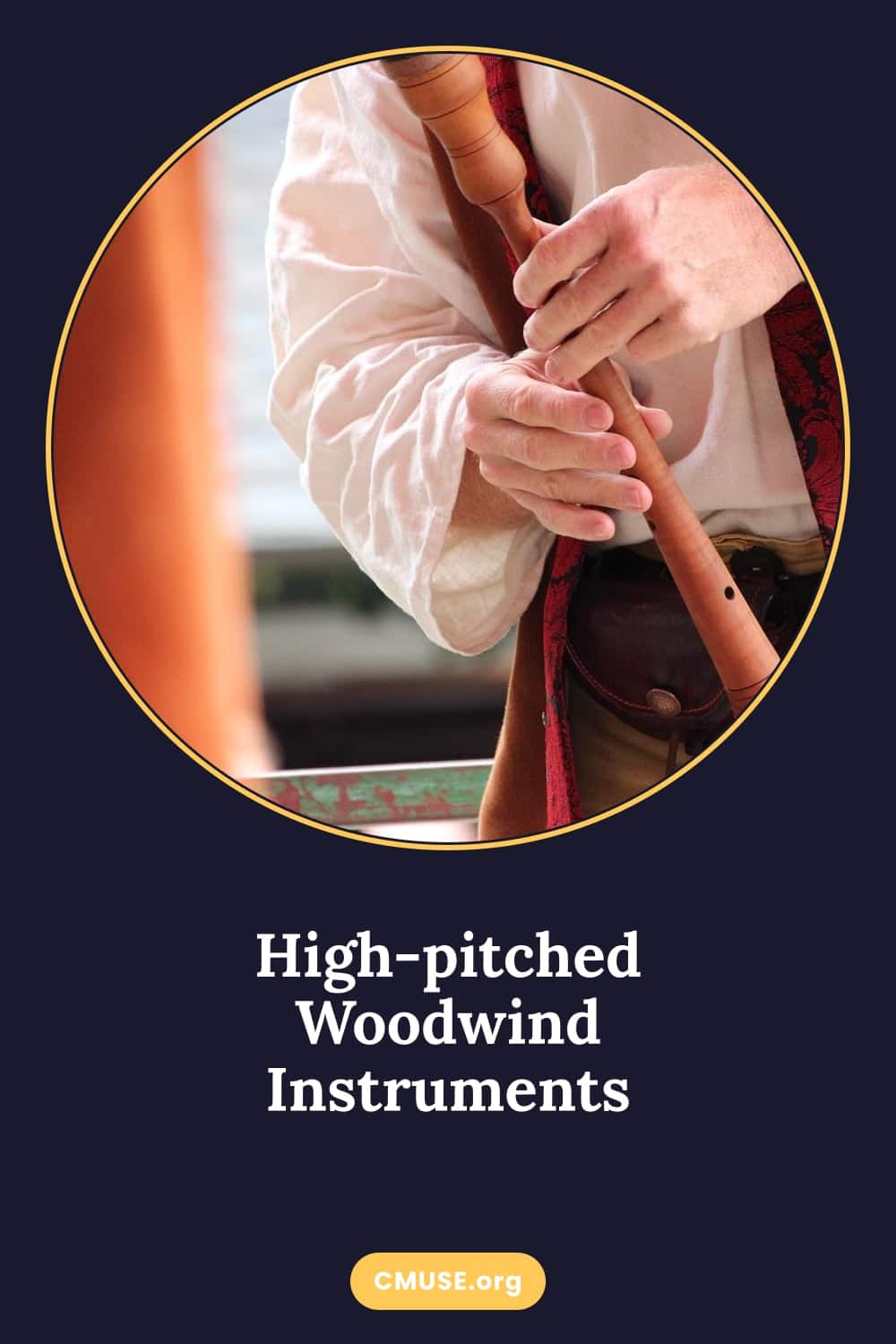
The fife, though often associated with marching bands and Revolutionary War reenactments, deserves recognition as a serious high woodwind. Essentially a small side-blown flute without keys, it produces a shrill, penetrating sound designed to carry across battlefields and parade grounds. Traditional fife and drum corps still use it to perform intricate melodies at a marching tempo that would challenge most flutists.
The lack of keys forces players to rely on half-holing and precise embouchure to hit chromatic notes, which builds extraordinary ear training. Modern makers have added keys to some models, yet many purists prefer the simple wooden tube that forces cleaner technique. The fife’s tone is not subtle, but its raw energy and historical resonance give it a place no other instrument can fill.
7. A-flat Piccolo Clarinet
Finally, the highest clarinet variant, the A-flat piccolo clarinet, pushes the boundaries of what a reed instrument can do. Rare and demanding, it appears mostly in contemporary classical music and experimental ensembles. Its tiny size and extremely high pitch create a sound that can border on the insect-like, yet skilled players coax a surprising sweetness from it.
The instrument’s fingerings are cramped, its reeds delicate, and its intonation unforgiving. Most musicians will never encounter one outside of specialized festivals. Still, its existence proves how far woodwind makers will go to chase a particular color.
When a composer needs a sound that exists in the realm between music and bird call, this is the tool they reach for.
These instruments share a common challenge. The higher the pitch, the narrower the margin for error. A split second of poor breath support turns a musical line into a squeak that everyone notices.
Yet that same exposure is what makes high woodwinds thrilling. They cannot hide. Every nuance, every intention, every mistake stands out in sharp relief.
That vulnerability creates a directness of expression that larger, mellower instruments rarely achieve.
Listening for these voices the next time you hear an orchestra or wind ensemble changes everything. Suddenly you notice how a single piccolo can transform a crescendo into something electric or how an E-flat clarinet can add just the right bite to a chord. The high woodwinds are not merely the top layer of the ensemble.
They are the sparkle, the edge, and sometimes the cry that makes the whole texture come alive. Pick one that speaks to you, spend time with it, and you will discover why generations of musicians have accepted the difficulty in exchange for that unmistakable, soaring clarity.