
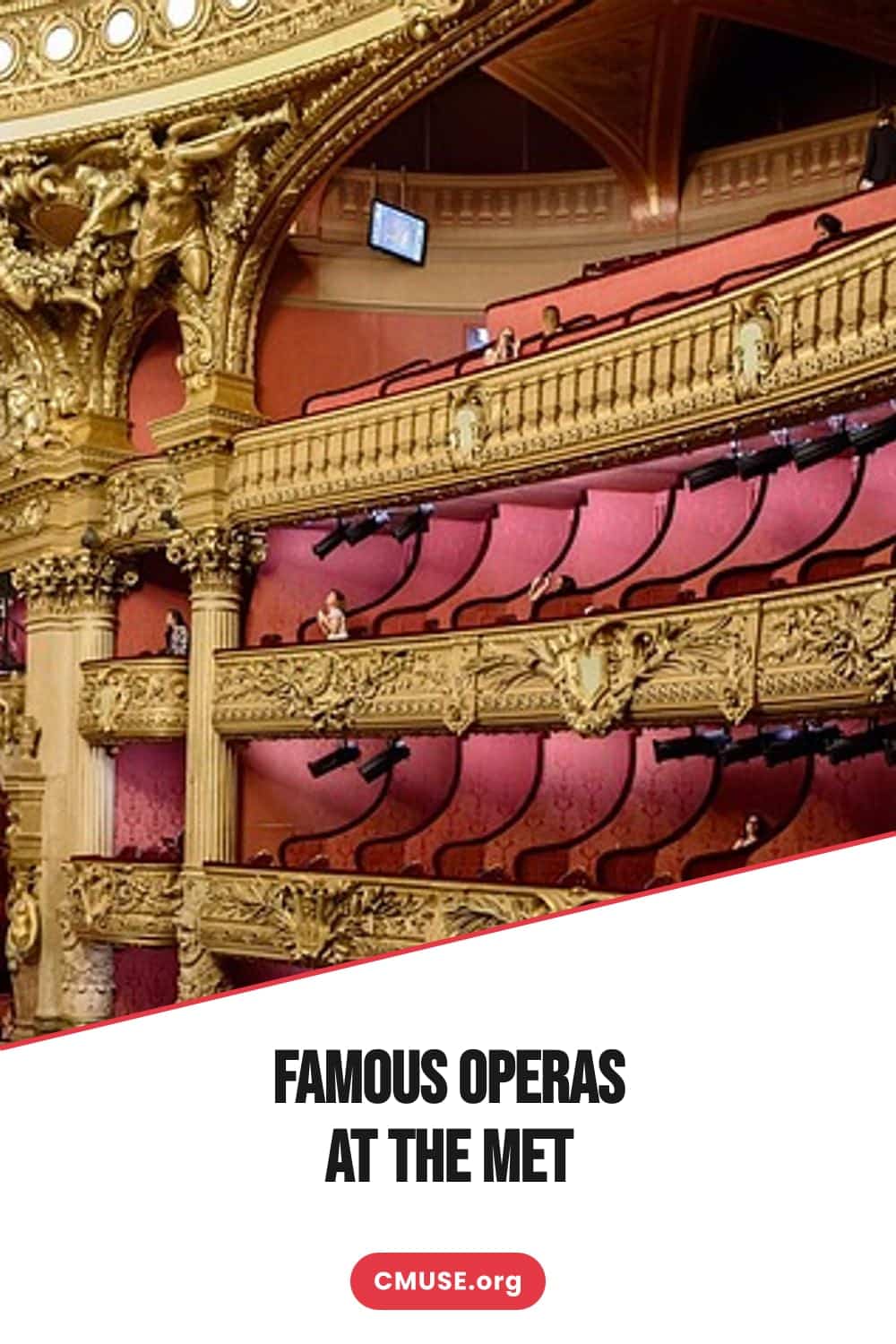
The Metropolitan Opera House stands as one of the world’s most iconic stages for opera. Its gold curtain and vast auditorium have witnessed performances that defined vocal art for over a century. When you sit in those seats or watch a broadcast you feel the weight of history mixed with the thrill of live drama sung at the highest level.
The Met has premiered works introduced legends and kept classics alive through wars economic crises and shifting tastes.
What makes an opera famous at the Met goes beyond catchy tunes or big voices. These productions often capture a perfect storm of memorable music unforgettable singers innovative staging and cultural resonance that keeps audiences returning decade after decade. The list that follows gathers ten operas that have left the deepest marks on the Met’s stage.
Each one earns its place for different reasons yet all share the power to move people in ways that feel both timeless and urgently alive.
Ten Most Famous Operas at the Met
1. La Boheme
La Boheme tops any serious list for good reason. Puccini‘s 1896 masterpiece about young artists scraping by in Paris arrived at the Met in 1908 and never really left. The story follows Rodolfo and Mimi as love poverty and illness collide in four short acts.
What keeps it fresh is how completely the music mirrors the emotional weather of the characters. One moment you laugh at the boisterous horseplay in the garret the next you are reaching for tissues during the final scene. The Met has presented it over 1,300 times because it offers young singers career-making roles while giving veterans a chance to show refined artistry.
Even if you know the ending by heart the right cast can still make you hope against hope that Mimi will recover.
2. Carmen
Right behind it comes Carmen. Bizet’s seductive tragedy opened the Met’s 1905 season with a bang and has rarely been absent since. The title role demands a singer who can act as convincingly as she sings which explains why interpreters from Geraldine Farrar to Denyce Graves have owned the stage in different eras.
The opera’s genius lies in its refusal to make Carmen a simple villain or victim. She lives exactly as she chooses until the price becomes fatal. The Met’s productions often emphasize the heat and color of Seville yet the orchestra’s famous motifs remind you that fate is already tightening its grip.
When the final drumbeats land after Don Jose’s desperate stab the silence that follows feels heavier than any curtain call applause.
3. Aida
Verdi‘s Aida brings grand opera to its spectacular peak. The Met’s first production in 1886 featured live animals and massive sets that set the standard for what opera could look like visually. The story of an Ethiopian princess enslaved in Egypt who loves an Egyptian general plays out against political intrigue and military triumph.
Yet the real drama happens in the quiet moments between Aida Amneris and Radames. The Nile scene duet remains one of the most delicate passages in all of opera while the triumphal march still fills the auditorium with brass and choral power. Modern productions sometimes scale back the elephants but the emotional scale never shrinks.
You understand why this work helped cement Verdi’s reputation as the voice of a unified Italy.
4. The Magic Flute
The Magic Flute offers something completely different yet equally essential. Mozart‘s singspiel mixes fairy tale quests with philosophical ideas about enlightenment and human goodness. At the Met it has appeared in productions ranging from the elegant to the downright quirky including a famous version with giant puppets.
Papageno’s bird catcher arias provide comic relief while the Queen of the Night’s coloratura arias test any soprano’s upper register. What earns this opera its permanent spot is its perfect balance. It never talks down to children in the audience yet rewards adults with layers of meaning.
The final chorale about wisdom and beauty still sends chills when the chorus and orchestra lock together under James Levine’s old baton or any conductor who truly understands Mozart’s clarity.
5. Tosca
Tosca delivers pure theatrical adrenaline. Puccini’s 1900 shocker about a singer a painter and a corrupt police chief unfolds in real Roman locations across a single day. The Met embraced it early and has never let go.
The second act torture scene the leap from the Castel Sant’Angelo and the shepherd boy’s song at dawn have become cultural touchstones. Maria Callas practically redefined the title role in the 1950s bringing a dramatic intensity that made previous Toscas seem tame. What matters most is how the music and drama remain perfectly welded.
Every orchestral stab mirrors Scarpia’s cruelty every soaring phrase captures Tosca’s defiance. Even when you know the plot twists the stakes feel personal.
6. Wagner’s Ring Cycle
Wagner’s Ring cycle stands apart because it is less a single opera than a four-evening mythic universe. The Met mounted its first complete cycle in 1889 and has returned to it regularly ever since often with groundbreaking technology. From the opening E-flat chords of Das Rheingold through the immolation scene that ends Gotterdammerung Wagner demands everything from singers orchestra and audience.
The role of Brünnhilde has broken and made careers in equal measure. What keeps the cycle on this list is its sheer ambition. It tries to explain the whole world through gods love power and eventual destruction.
When the Met’s brass section nails the Siegfried motif or when the Rhine maidens float above the stage during the final redemption the experience transcends opera and becomes something closer to ritual.
7. Rigoletto
Rigoletto showcases Verdi’s gift for character portraiture in under three hours. The hunchbacked jester’s protective love for his daughter Gilda collides with the Duke of Mantua’s casual cruelty in a story that still feels dangerously modern. The Met gave the American premiere in 1851 just months after Venice and has kept it in rotation ever since.
“La donna è mobile” may be one of the most whistled tunes in music yet the quartet that closes Act Three reveals four distinct personalities singing four distinct truths at once. That technical brilliance serves a deeper point about how power corrupts and how even clever people can be destroyed by their own secrets. Baritones from Leonard Warren to Quinn Kelsey have found lifetime roles in the title part.
8. Madame Butterfly
Madame Butterfly brings cultural collision and heartbreaking lyricism together. Puccini’s 1904 tragedy follows a young Japanese geisha who marries an American naval officer only to be abandoned. The Met’s first staging in 1907 helped establish the work’s reputation outside Italy.
The humming chorus the flower duet and the devastating final scene have become shorthand for operatic sorrow. What separates great Butterfly performances from merely good ones is the ability to make the character’s innocence feel genuine rather than naive. When a soprano like Renata Scotto or Hui He connects with the role the audience understands that this is not just a story about a broken heart but about imperialism and the wreckage it leaves behind.
9. Don Giovanni
Don Giovanni continues to fascinate because Mozart and da Ponte created a protagonist who is both magnetic and monstrous. The Met has presented this dramma giocoso since the early 20th century in productions that range from traditional to wildly conceptual. The catalog aria the stone guest scene and the moral whirlwind of the finale never lose their power.
What earns it a place here is its moral ambiguity. Giovanni faces damnation yet the other characters hardly seem worth saving either. That complexity keeps directors and singers returning to mine new meanings.
You leave the theater arguing about whether the ending delivers justice or merely theatrical convenience which is exactly what great art should do.
10. Turandot
Turandot represents Puccini’s final and most ambitious statement. The composer’s death before completing the final duet has created a performance tradition all its own with different endings debated by scholars and conductors. The Met’s lavish Franco Zeffirelli production became a tourist attraction in its own right during the 1980s and 90s. “Nessun dorma” may have become an anthem for tenors everywhere yet the opera’s real strength lies in its exotic orchestration and the psychological duel between the icy princess and the unknown prince.
When the riddles are solved and the kiss breaks the spell something ancient and modern feels resolved at once. The unresolved final bars in some versions serve as a reminder that even masterpieces can leave questions hanging which seems fitting for an art form that thrives on interpretation.
These ten operas do not exhaust the Met’s rich history. They do however represent the works that have consistently drawn crowds challenged performers and expanded what audiences thought opera could be. The next time you find yourself under that famous chandelier or streaming a Live in HD broadcast listen for the particular electricity that only the Met can generate.
Great opera does not just fill the ear it rearranges something inside you. That transformation is why these pieces keep earning their place on one of the world’s most demanding stages season after season.