
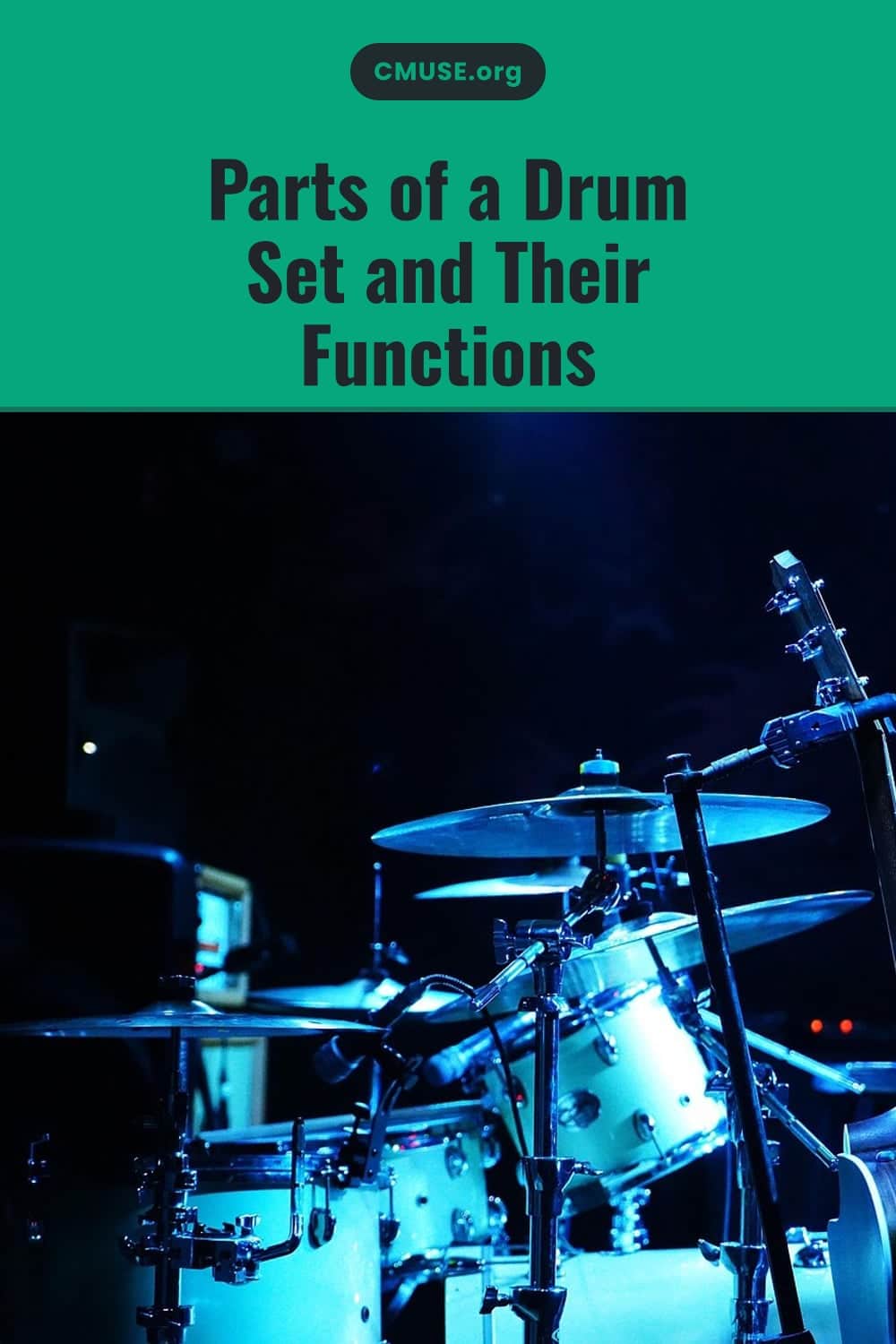
The first time you sit behind a drum kit the whole thing feels like controlled chaos. Cymbals everywhere, mysterious metal stands, and a confusing array of drums that all seem to make noise when you hit them. Yet every single piece has a job, a personality, and a reason it belongs exactly where it is.
Understanding those roles turns random banging into actual music. Once you know what each part is supposed to do, the kit stops looking like a puzzle and starts feeling like an instrument you can speak through.
That knowledge also saves you money and frustration when you shop for gear or try to fix problems mid-rehearsal. The difference between a tight groove and a sloppy mess often comes down to whether the drummer respects what each component was designed for. So here is your guided tour through the essential parts of a drum set, what they actually contribute, and why they matter more than most beginners realize.
Essential Parts Of A Drum Set And Their Roles
1. Kick Drum
The kick drum sits at the heart of everything. Also called the bass drum, it is the largest drum in the kit and almost always played with a pedal using your right foot. Its main job is to deliver the low-end thump that drives the band forward.
In most modern styles you will hear it on beats one and three in a four-four pattern, though plenty of genres push it into more syncopated territory. The size, usually between 20 and 24 inches in diameter, determines how much air it moves and therefore how boomy or focused the sound becomes. A well-tuned kick with the right beater and dampening can cut through a loud mix without drowning out the rest of the kit.
Skip this foundation and the entire groove feels like it is floating two inches off the ground.
2. Snare Drum
Right in front of you lives the snare drum. It is the sharp, cracking voice that gives every beat its personality. The snare sits on a stand at waist height and features a set of metal wires stretched across its bottom head.
Those wires, called snares, are what create the distinctive buzzing snap when the top head is struck. You will use it on the backbeats, usually two and four, to keep time and add attitude. The snare is also the most versatile drum on the kit.
Rim shots, cross-sticks, ghost notes, and rolls all happen here. Because it cuts through everything else so clearly, a bad snare choice or poor tuning can make even a skilled player sound amateurish. Treat it with respect.
3. Toms
Flanking the snare are the toms. Most kits come with at least two: a smaller rack tom mounted on the bass drum or a separate stand, and a larger floor tom that stands on its own legs. Their role is to add melodic and rhythmic color between the kick and snare.
Think of them as the kit’s storytelling drums. When a drummer launches into a fill, the toms usually do the heavy lifting, carrying the energy from one section of the song to the next. The rack tom delivers quicker, higher-pitched attacks while the floor tom offers deeper, longer sustain.
How many toms you need depends on the music you play. Jazz players often get by with one, while metal drummers sometimes bolt on three or four. The important part is tuning them so they speak clearly without ringing into each other.
4. Hi-hats
Cymbals are where the shimmer and texture live. Start with the hi-hats, two cymbals mounted on a stand with a pedal that lets you open and close them. Closed hi-hats give you a tight, ticking pulse that sits perfectly in the pocket.
Open them up and you get a washy, airy sound that adds drama and breath to the groove. The hi-hat is often the busiest voice in the kit, keeping constant eighth notes or sixteenth notes while everything else punches in selectively. Most drummers keep one foot on the hi-hat pedal even when they are not actively opening and closing it because it helps anchor their balance and timing.
5. Ride Cymbal
The ride cymbal is the hi-hat’s bigger, steadier cousin. It usually lives to the right of the kit and provides a clear, bell-like tone that can carry an entire song when played continuously. The ride’s function is to outline the pulse without getting in the way.
Its large surface lets you play patterns that feel both precise and relaxed. Many players use the shoulder of the stick on the bell for extra cut during chorus sections. A good ride reveals its true character only after you have played it for a few weeks.
The metal needs to settle into your particular touch before it really sings.
6. Crash Cymbals
Crash cymbals deliver the exclamation points. They are the bright, explosive bursts that mark transitions, accents, and the ends of fills. Most kits have at least one crash, often positioned to the left of the kit so the left hand can reach it easily.
Bigger crashes deliver longer sustain and more wash while smaller ones offer quicker decay and surgical precision. The trick is learning not to overuse them. A crash loses its power when it becomes wallpaper.
Save it for moments that actually deserve the spotlight and the whole band will feel the lift.
7. Drum Throne
The drum throne might look like an afterthought but it is the part that affects every other piece. You cannot play well if you are fighting your seat. A proper throne gives you height adjustment, a comfortable seat, and enough stability to shift your weight without sliding around.
Good posture starts here. Your knees should sit slightly lower than your hips, your back straight, and your shoulders relaxed. Many players spend years on a cheap round stool before realizing their back pain and sloppy foot technique both trace back to an unstable base.
Once you find the right throne height the rest of the kit seems to fall into place around you.
8. Hardware
The hardware, those chrome stands and clamps holding everything together, deserves more credit than it usually gets. A wobbly hi-hat stand or a rack tom mount that slips mid-song can destroy the tightest groove. Look for stands with solid double-braced legs and memory locks that remember your exact setup every time you tear down and rebuild.
The best hardware disappears so completely that you forget it is there. That is exactly the point. It should support the drums without adding noise or demanding constant attention.
9. Bass Drum Pedal
Finally there is the often overlooked bass drum pedal. This simple-looking contraption translates every movement of your foot into a clean strike on the kick drum. Modern pedals offer adjustable spring tension, beater angle, and footboard angle.
Some players prefer a light, fast pedal for intricate double-bass patterns while others want a heavier, more powerful feel for rock and metal. The right pedal becomes an extension of your leg rather than a separate machine you have to fight. Spend time dialing it in because small changes here can dramatically change how the entire kit feels and sounds.
Once you see the drum kit not as a random collection of noise-makers but as a set of specialized tools working together, something clicks. Every decision, from how you angle a crash to how tightly you tension a snare, suddenly carries more weight. The instrument stops being mysterious and starts revealing its logic.
That is when the real fun begins, because now you are not just hitting drums. You are having an actual conversation with the music, one deliberate, well-informed stroke at a time.