
The kick drum sits at the heart of every drum set. It is the low punch that makes your chest feel something before your ears catch up. Without a solid kick foundation the whole kit can feel loose or unbalanced no matter how crisp your snare is or how tight your cymbals shimmer.
Learning what actually makes up that kick assembly helps you maintain it, upgrade it intelligently, and understand why certain kits feel so much better to play than others.
A modern kick drum is not one single thing but a collection of carefully chosen parts working together. Each component has a job that affects volume, tone, speed, and feel. Once you know what you are looking at you stop treating the kick like a mysterious black box and start making decisions that actually improve your playing.
The following pieces matter most.
Essential Parts of a Kick Drum Assembly
1. The Kick Drum Shell
The shell is the biggest single influence on how your kick sounds and feels. Maple shells deliver warm rounded tones with good low end while birch brings brighter attack and projection. Birch is popular in rock and metal because it cuts through loud band volumes without needing much EQ.
Acrylic shells look incredible under stage lights and produce a sharp clicky attack that some players love for studio precision though they can feel a little sterile for slower grooves.
Shell depth matters too. A 16 inch deep kick emphasizes boom and body while a 14 inch version stays tighter and quicker. The diameter is almost always 22 inches on adult kits though 20 inch kicks are gaining fans for their faster response in smaller venues.
Whatever size you pick the shell has to be perfectly round and the bearing edges must be true. A warped edge kills resonance faster than any other fault and that is the part most new players overlook when buying used gear.
2. Hoops and Rim Construction
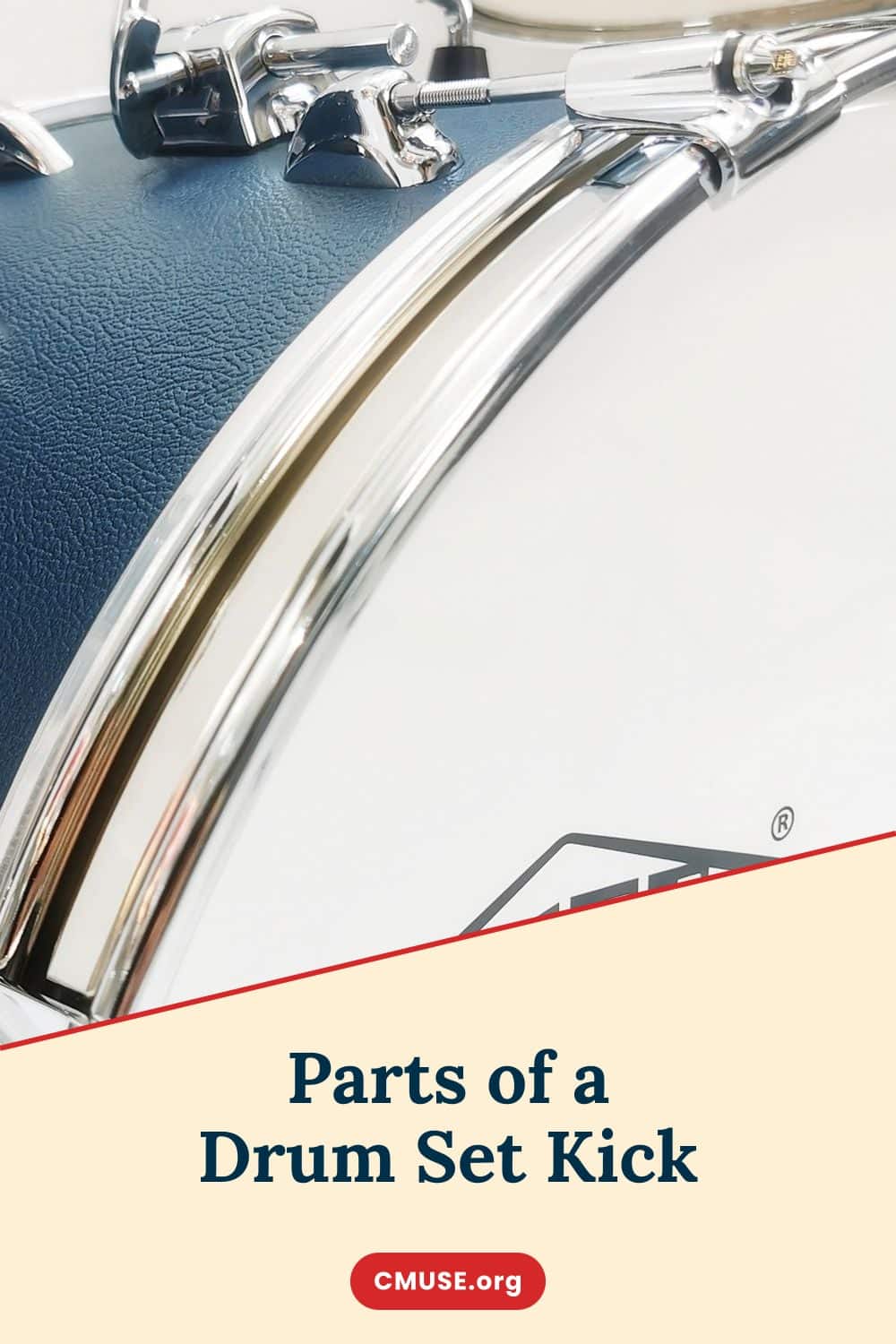
The hoop that circles the batter head is usually made of steel or aluminum on the outside and sometimes wood on the inside for a slightly warmer attack. Die cast hoops are heavier and give you more focused attack while flanged hoops are lighter and produce a bit more ring. Many players swap to a die cast batter hoop when they want their kick to punch through a dense mix.
The hoop also has to withstand repeated beater impact so a bent hoop will throw off your entire pedal feel.
3. Batter Head Selection
The batter head is the surface you actually strike and it takes the most abuse. A single ply head with a dot in the center offers maximum attack and volume but wears out faster. Double ply versions last longer and give a fatter less ringy sound that many rock drummers prefer.
4. Resonant Head and Porting
The resonant head on the front is usually thinner and often has a large port cut in it. That port is not just for looks or for sticking a microphone inside. It controls how much air escapes which directly shapes how boomy or tight the drum feels.
A smaller port keeps more low end while a larger one bleeds off air for a quicker decay.
5. Kick Pedal Mechanics
The kick pedal is where technique meets mechanics and a good one makes fast doubles feel easy. The chain drive or strap drive system transfers your foot motion to the beater. Chain drives tend to feel more direct while straps offer a little forgiveness that helps with speed.
Spring tension is personal. Too loose and the beater flops around. Too tight and your calf burns after twenty minutes.
Most quality pedals let you adjust the spring tension and the beater angle independently so you can fine tune the rebound to match your style.
6. Beater Material and Character
The beater itself changes the entire character of the drum. A felt beater gives a soft round attack that works beautifully for jazz and lighter rock. Plastic or hard rubber beaters produce a sharp click that cuts through loud guitars.
Some players use wooden beaters for an even more aggressive sound though they chew up heads faster. Many modern beaters are reversible so you can switch from felt to plastic in seconds during sound check which is exactly the kind of practical detail that separates casual players from working drummers.
7. Spurs and Stability
The spurs or legs that hold the kick upright might look simple but they prevent the drum from creeping forward during fast playing. Good spurs have rubber feet that grip the floor and metal spikes that can be flipped down on slick stages. The angle of the spurs also affects how much the drum moves when you play hard.
If your kick keeps walking away from you during a gig check the spur angle first before you blame your pedal technique.
8. Tom Mounts
The tom mount attached to the kick is easy to forget until you need to adjust your rack toms. A well designed mount stays solid even when you are pounding away. Some mounts clamp directly to the hoop while others attach to a separate post.
The post style usually gives you more flexibility in tom positioning but adds a tiny bit of extra weight. Either way the connection must not rattle or work loose during performance.
9. Cam and Lever Systems
The bass drum pedal beater shaft and cam system determine how smoothly the beater returns. High end pedals often feature adjustable cams that let you change the leverage ratio. A larger cam radius gives more power with less effort while a smaller one offers quicker response for fast footwork.
That is the part that explains why two seemingly identical pedals can feel completely different under your foot.
10. Tension Rods and Hardware
The shell’s hardware finish and tension rods complete the package. Tension rods must turn smoothly and stay tight through temperature changes. Cheap rods strip easily and nothing kills your groove faster than a loose lug in the middle of a set.
Many drummers replace stock rods with stainless steel versions for better durability and smoother tuning.
11. Muffling and Damping Systems
Finally the kick drum pillow or muffling system is the last piece of the puzzle. You can use a small pillow pressed lightly against the batter head or a larger one that touches both heads. The goal is not to choke the drum but to control excessive ring and focus the low end.
Some players tape a small towel near the beater impact point instead. The right amount of damping makes the kick sit perfectly in the mix without killing its natural voice.
Getting familiar with each of these parts turns the kick from a mysterious thud into something you can shape and control. Once you understand how the shell depth talks to the head choice and how the pedal geometry affects your speed the entire drum set starts working together better. Your kick stops fighting the rest of the kit and starts driving it exactly where you want to go.
That solid foundation is what lets every other element shine.