Drum Head Replacement Interval Calculator
Estimate batter and resonant head timing from playing hours, stick intensity, dents, coating wear, tuning drift, drum type, and live or studio reliability risk.
The calculator treats dents, coating loss, tuning drift, and session risk as separate triggers because a head can still have hours left while already being unreliable.
Recommended Drum Head Timing
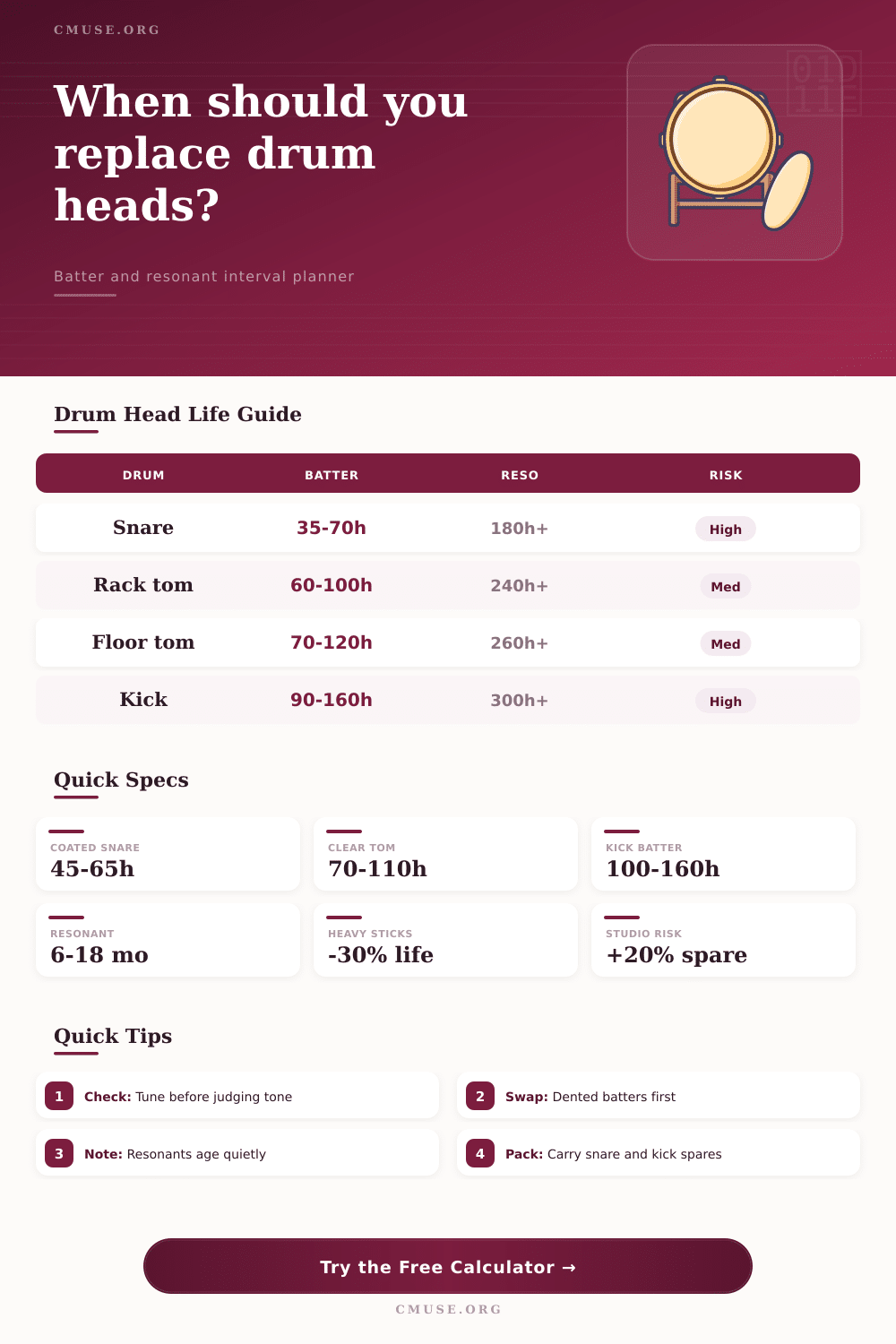
| Drum Position | Batter Head Baseline | Resonant Head Baseline | Why It Changes |
|---|---|---|---|
| Snare drum | 35 to 70 playing hours | 160 to 260 playing hours | Rimshots, brushes, cross-stick, and high tension expose wear quickly. |
| Rack tom | 60 to 100 playing hours | 220 to 340 playing hours | Medium strike force, pitch range, and even head rotation usually extend life. |
| Floor tom | 70 to 120 playing hours | 240 to 380 playing hours | Lower tension hides fatigue, but dead attack becomes obvious in microphones. |
| Kick drum | 90 to 160 playing hours | 260 to 460 playing hours | Beater patch condition, port tears, and muffling pressure are the main triggers. |
| Observed Condition | Calculator Effect | Typical Cause | Maintenance Read |
|---|---|---|---|
| No dents, stable tuning | Full interval | Even strike zone and normal tension | Keep logging hours and retune before each session. |
| Small dents or center dish | Shortens 20 to 35 percent | Hard attack, high stick angle, or stretched film | Replace before recording or tune-critical gigs. |
| Coating half gone | Shortens 12 to 22 percent | Brush work, repeated backbeat zone, or heavy cleaning | Change sooner for brush tone, articulation, or camera work. |
| Tuning drops mid-session | Shortens 30 to 50 percent | Collar fatigue, uneven seating, lug slip, or head damage | Treat as a reliability trigger even if tone is acceptable. |
| Head Type | Life Tendency | Best Replacement Cue | Common Drum Use |
|---|---|---|---|
| Coated single-ply | Medium head life | Coating loss, brush feel, snare tone flattening | Snare, jazz toms, vintage-style setups |
| Clear single-ply | Medium to long life | Dents, cloudy strike zone, shorter sustain | Rack toms, floor toms, open rock kits |
| Two-ply head | Longer batter life | Dead center, denting, loss of attack definition | Rock toms, hard snare use, heavier players |
| Hydraulic or damped head | Longest wear margin | Flat rebound, uneven tone, visible dents | Low toms, controlled rock kits, practice rooms |
| Mesh practice head | Very long acoustic life | Fraying, uneven rebound, pulled edge | Quiet practice, electronic conversions |
| Playing Situation | Weekly Hours | Batter Checkpoint | Resonant Checkpoint |
|---|---|---|---|
| Home practice kit | 2 to 5 hours | Every 3 to 6 months | Every 12 to 24 months |
| Weekly rehearsal kit | 5 to 10 hours | Every 6 to 12 weeks | Every 8 to 18 months |
| Studio tracking kit | Session dependent | Before critical tracking | Inspect before drum setup |
| Touring or backline kit | 10 to 25 hours | Weekly or by show block | Every tour leg or damage check |
Even though you just tuned your snare, you might find yourself thinking that it sound dull leading up to a gig. If you are a drummer, this has happened to you too. Your head isn’t torn but something about it is dead. So you crank down on the lugs and your pitch goes up and then back down in a matter of minutes. That’s when you realize you haven’t been keeping track of your maintenance schedule, you’ve been guessing.
A lot of people wait until a head start to tear or simply buzz out of control before changing one out. Now you’ve got bad takes and you sound like mud on stage. Once you input how much wear there is and how many hours of playtime, the calculator do its thing. Because a head may appear just fine but fail acoustically, we’ve separated physical damage from tuning drift. As drummers, that’s an essential point.
How to Know When to Change Your Drum Heads
For instance, you’ll often see a clear tom head and assume if it looks okay, then it’s good enough. That’s not true. A clear head loses its sustain well before it shows any telltale pits. It’s the film that thins at the point of attack, flattening the tone and making the overtones undetectable. Don’t depend solely on what you see; you’ll never notice the subtle decay.
How fast this occurs depends on what you play. If you are ripping off heavy rimshots with a coated snare batter head, the coating will come off in no time. After that, it’s all downhill as high-frequency snap decreases and the feel of brush changes. How fast a head wears out also depends on how hard you hit it. Rock drummers pounding off rimshots will probably go through more heads then a jazz player using brushes who may double the life of their coated snare. Time is relative. Impact energy focused on a small surface area matter too.
Batter heads are distinct from resonant heads. Batter heads gets direct stick hits and sit on top of shell. This makes them prone to wear out far sooner than resonant heads. Resonant heads typically outlive batter heads by 3-5 times. But that doesn’t mean they live forever either. While resonant heads age gracefully, they go brittle with changing humidity levels and will no longer holds tension evenly.
If your resonant head is warped, it doesn’t matter how new or fresh your batter side is. Your drum won’t tune well at all. It’ll have you chasing a pitch for twenty minutes that simply doesn’t exist because your bottom head is pulling unevenly. Oddly enough, the environment also contributes to longevity.
The difference between dry heated rooms and moist club basement drum storage alters both the wooden shell and the plastic film. How the head sits on the rim also depends on moisture. When the collar fails it causes a sharp drop in tuning stability. The calculator considers storage conditions as a head that has been abused by temperature swings and travel will fail at a faster rate than one stashed in a stable studio closet. Don’t neglect the room you keep your kit in.
Look at that priority recommendation when you see the results. Does it say replace now? You should of not go try to get another week out of it. A fresh set of heads offers steady tuning and consistent rebound. Old drum heads acts unpredictably and behave inconsistently. Spare sets of kick and snare head are inexpensive insurance for disaster.
The stress of a drumhead breaking during a live performance or recording session outweighs the price of a new head by far. Consistency is key. When you sit down, you want your drums to sound like they do every other time. Tracking wear ahead of time eliminates that ‘oh crap’ moment when they suddenly lose their quality of tone. Maintenance becomes routine rather than panic.
From the first note to the last, the tuning stays put and each hit rings true. Your ears will thank you for it.