Piano Tuning Interval Calculator
Estimate how soon your acoustic piano should be tuned using humidity, seasonal stress, piano type, weekly playing hours, measured pitch drift, and performance or studio risk.
🎹Piano Tuning Presets
🎛Tuning Inputs
Use the average absolute drift near the middle register if you have a tuning app or technician note.
Recommended Piano Tuning Plan
📊Piano Spec Grid
📘Reference Tables
| Piano Type | Typical Maintenance Interval | Why It Changes | Calculator Starting Point |
|---|---|---|---|
| Home grand | 4 to 9 months | Longer scale, better stability when climate is controlled | 24 weeks |
| Baby grand | 4 to 8 months | Shorter scale and mixed home placement can move sooner | 22 weeks |
| Full upright | 5 to 10 months | Cabinet backs often face walls, vents, or windows | 26 weeks |
| Studio upright | 8 to 18 weeks | Used for lessons, practice rooms, and daily repetition | 16 weeks |
| Concert grand | 1 to 8 weeks | High exposure, high standards, and event tuning windows | 8 weeks |
| Spinet or small upright | 6 to 12 months | Short strings show pitch changes quickly but use is often light | 30 weeks |
| Humidity Pattern | Wood and Soundboard Effect | Pitch Behavior | Interval Adjustment |
|---|---|---|---|
| 42% to 48% RH, swing below 5% | Soundboard crown remains comparatively steady | Slow drift, stable unisons | Extend slightly |
| 35% to 55% RH, swing near 8% | Normal seasonal response for many homes | Moderate cents drift | Use normal interval |
| Below 35% RH in heated winter | Soundboard contracts and pitch often drops | Unisons spread faster | Shorten 15% to 30% |
| Above 55% RH in summer | Soundboard swells and pitch may rise | Fast seasonal drift | Shorten 15% to 25% |
| Weekly swing over 12% | Bridge and soundboard load changes repeatedly | Concert risk rises | Shorten 25% to 45% |
| Use Case | Weekly Hours | Risk Tolerance | Suggested Booking Window |
|---|---|---|---|
| Casual home practice | 1 to 7 | Low | Book when 70% to 100% of interval has passed |
| Active family piano | 8 to 15 | Moderate | Book when 60% to 85% has passed |
| Teaching studio | 16 to 35 | Moderate to high | Book monthly to quarterly |
| Recording studio | 6 to 30 | High | Book before the session block |
| Concert hall or broadcast | Varies | Critical | Book in the final event window |
| Scenario | Piano and Room | Typical Drift | Expected Interval |
|---|---|---|---|
| Stable home grand | Grand, 45% RH, light use | 3 to 6 cents | 22 to 32 weeks |
| Dry winter upright | Upright, 30% RH, heat on | 8 to 18 cents | 10 to 18 weeks |
| Teaching studio | Studio upright, daily lessons | 6 to 14 cents | 8 to 14 weeks |
| Recording grand | Grand, controlled room, microphones | 3 to 8 cents | 4 to 8 weeks |
| Concert grand week | Moved or staged grand | 2 to 10 cents | 1 to 4 weeks |
💡Tuning Interval Notes
If you’re recording something on your piano, and you notice the piano is out-of-tune, you know there’s a certain feeling of dread you can’t get away from. After all the hours of recording vocals, you play back what you’ve recorded and discover the piano has wandered well off-pitch. Not only does this become frustrating; it costs you both time and money.
Most owners consider tuning to be routine maintenance, like changing the oil in your car. Most owners assume a fixed schedule will keep things running smoothy. The plan is great, unless the car is used more than usual or there is a sudden change in weather. Because a piano is a living thing composed of wire and wood, it react to its surroundings continuously.
When to Tune Your Piano
By taking into account variables most people overlook, this calculator takes you beyond guesswork. Pianos are unstable instrument. They absorb moisture and expand, then dry out and contract, causing the wood to move physically. This movement alter the tension on the soundboard and directly affects the tension on the strings. If your room swings between forty percent and sixty percent relative humidity in a single week, it puts substantial structural stress on your piano. Sure maybe you don’t hear the wood creaking, but you will hear it change pitch.
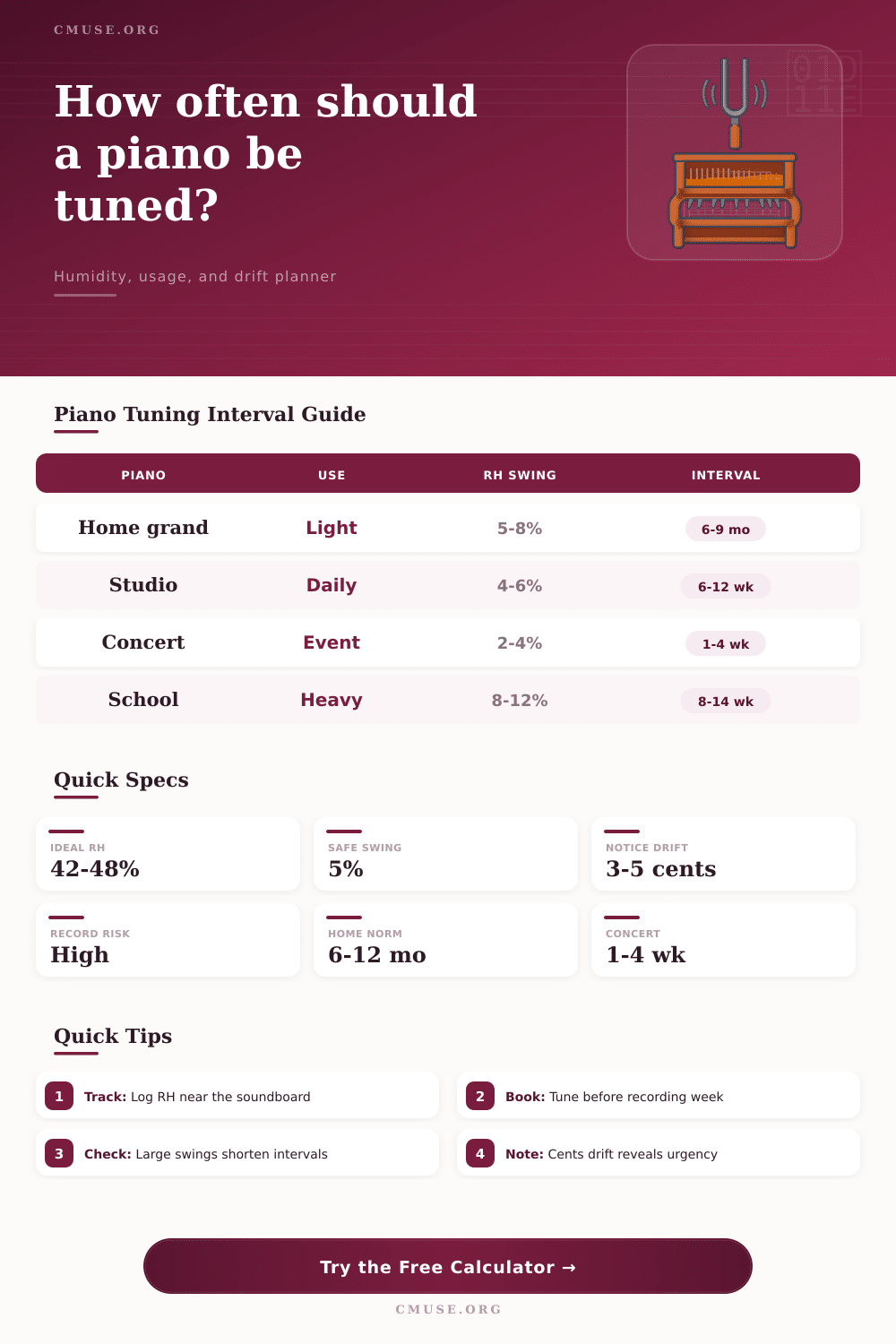
The average humidity content isn’t everything. How stable it is is even more important. An environment that fluctuates widely around an average is less desirable then one that stays close to and steady at its average, even if it is lower or higher. This comes through clearly in the table below from that page. What it demonstrates is that huge fluctuations like those found in a week will require much shorter service intervals for your piano. If the environment is unstable, there’s no hope of tuning it to stay stable; you can only compensate for its drift.
Another wrinkle in all this: how do you use it? For example, a piano used casually at home for an hour per week will maintain its pitch far better than a teaching studio upright. That type of piano are subjected to four hours of heavy-duty repetitions every day. Regular use wears the string and pin mechanism out more quickly. That’s what the week-by-week playtime entry asks about. Not time. It is mechanical wear.
When you’re up against a high-stakes recording or concert, your risk tolerance level goes down to zero. No matter what the calendar reads, you want that last tune-up closer to the gig date. All too many owners wait until they can hear the problem before calling their tech. Often by this point a basic maintenance tune is not going to cut it because the drift has gotten so extreme. Now it require a more costly pitch raise and will take longer as well. Better to stay ahead of the curve here.
Use a simple hygrometer around the soundboard to monitor your relative humidity. This information will help you make an informed decision. To get things going quickly, this tool provides preset buttons with their appropriate starting points for typical situations. It covers everything from home use at the more stable end of the range to moving stage concerts. Each of the presets goes some way to showing just how much your recommended interval can differ depending on circumstances.
The conditions experienced by a piano in a climate-controlled living room are vastly different than those of an instrument in a church sanctuary that is heated in winter and cooled in summer! But finally, tuning isn’t only about getting the right note. It’s also about maintaining the structural integrity of the piano; its sound. Regularly paying attention to the piano helps it keep a responsive action and prevents pins from losing their grip for good.
Understanding the fundamentals of how strings work and the natural movement of wood doesn’t require you to be a technician but does require you to listen to the environment your piano inhabits. Aligning your maintenance plan to reality instead of tradition will serve not only to safeguard the instrument but the music too. True sound remains true and the dread never gets started.