Practice Tempo Ramp Calculator
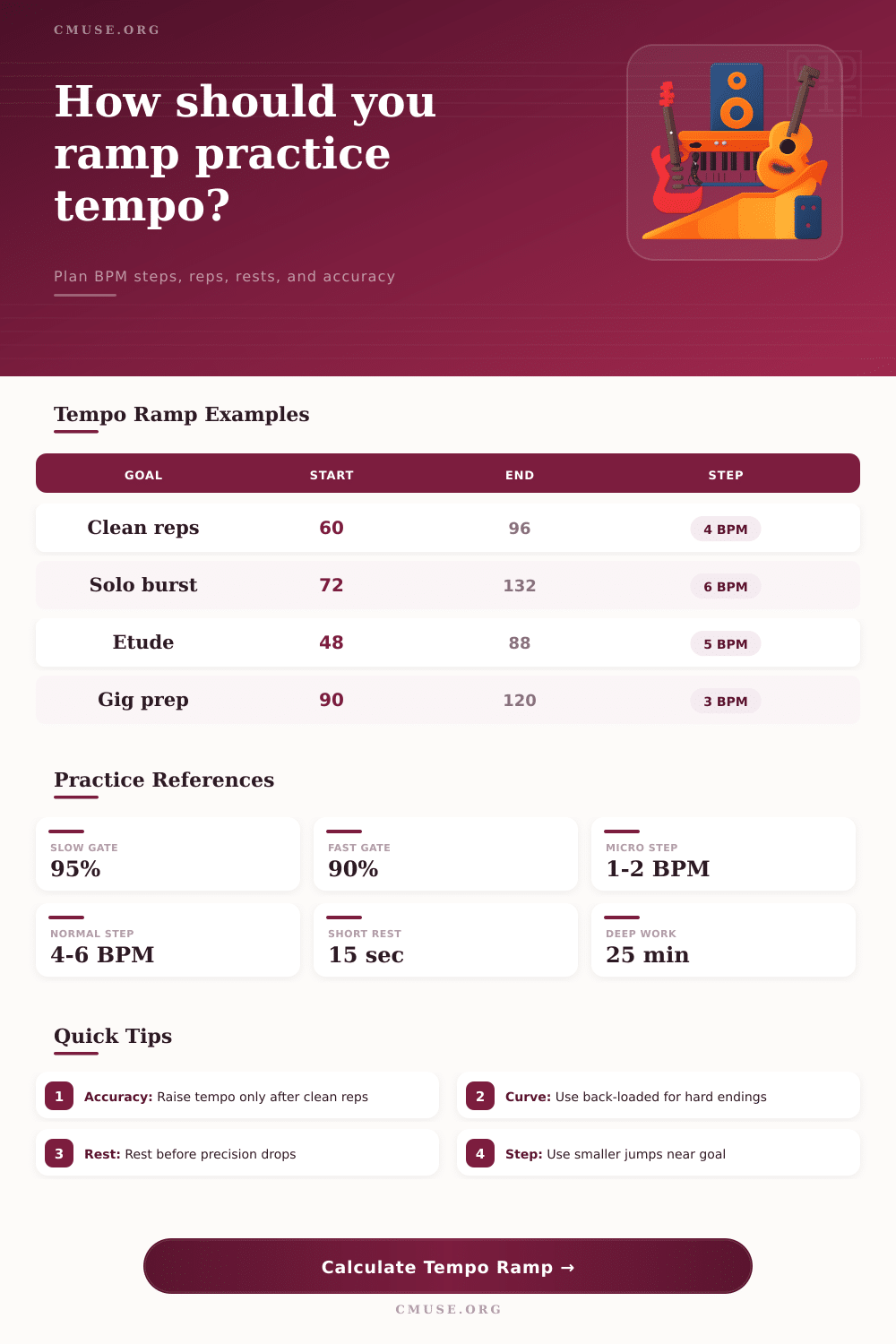
Plan a deep practice ramp from start BPM to goal BPM with step size, repetitions, bars per step, rest time, session limit, curve shape, and accuracy target.
Presets fill the controls and run the calculator. Use them as practice structures, then adjust the accuracy target and rest time for the passage.
Calculation Breakdown
| Step | Tempo | Runs | Play Time | Rest | Gate |
|---|---|---|---|---|---|
| Run the calculator to build the ramp plan. | |||||
| Checkpoint | BPM | Elapsed | Focus |
|---|---|---|---|
| Checkpoints appear after calculation. | |||
| Step Type | BPM Jump | Best Use | Accuracy Gate |
|---|---|---|---|
| Micro adjustment | 1-2 BPM | Fast passages, audition tempo, injury recovery | 94-98% |
| Standard ladder | 3-5 BPM | Scales, etudes, sight-reading drills | 90-95% |
| Large confidence jump | 6-10 BPM | Warm material that already feels stable | 88-92% |
| Stress test | 12+ BPM | Diagnostic bursts, not final polishing | 85-90% |
| Score Band | Decision | Tempo Action | Practice Note |
|---|---|---|---|
| 98-100% | Mastery pass | Advance or reduce reps | Keep one relaxed repeat for memory. |
| 92-97% | Working pass | Advance if tone and rhythm stay even | Mark the weak beat before moving on. |
| 85-91% | Borderline | Hold tempo or drop one step | Split the passage into smaller cells. |
| Below 85% | Reset | Return to last clean tempo | Slow the motion until errors are named. |
| Block | Length | Ramp Shape | Typical Use |
|---|---|---|---|
| Warm precision | 8-12 min | Linear | Daily scale or bowing checkpoint |
| Deep passage | 20-30 min | Back-loaded | Difficult bars that fail near goal tempo |
| Performance polish | 15-20 min | Micro near goal | Tempo consistency and clean starts |
| Endurance test | 35-45 min | Wave | Maintaining accuracy under fatigue |
Tempo is generaly thought of as a speed limit sign. Most player see it in the music and try to hit it. If they don’t, they slow down until they do. That feels intuitive but it go directly against your nervous system. What is realy happening is not that you can’t get up to speed. The issue are that you have never developed the brain connection to keep going at speed when required.
A practice tempo ramp treats speed as something you control as a variable, instead of something you are trying to achieve blind. Using that BPM goal, the calculator above turn it into a series of reps and rest period that form a complete practice session. It also makes you slow down, allowing your brain time to catch up with your hands.
How to Practice Speed Smartly
The mechanism itself is uncomplicated. Start at a tempo that you can hit perfectly, then slowly increase pace. One mistake and you stop. Brutal? Yes. It is also efficient. Most people waste their time playing things they already know at tempos more better than what they have yet to achieve. By using this system, all the repetitions remains under a tight accuracy gate, making the wasted effort redundant.
Most folks trip up at the point of choosing their step-size. For example, etudes and scales typically has a four BPM jump in them. This is enough to move the piece forward, but not so much as to feel overwhelming. On the other hand, if you’re tackling a really difficult section close to your desired speed, then the steps should be smaller. The table on page clearly explains it. When we are ‘in shouting distance’ from our target, small changes of one or two beats per minute are crucial. This help embed the muscle memory while avoiding the panic response to large jumps.
So not only does the size of each step matter but also the shape of that step. For example, a linear ramp ramps up the pace gradually over time. It is great for a general technique drill or warming up with some easy material. If however, you’re polishing a tricky passage in a concerto then you’d prefer something more like a back-loaded curve. This would keep those initial steps small and put the larger jumps at the end of practice session when you are focused but your fingers is warmed up. A front loaded ramp might be useful if you have a weak start to a phrase perhaps. You get the tough bit out of the way at the time when your energy levels is highest.
The rest periods are not wasted. They are a necessary part of the process. Your body gets tired and that will affect how you hear things. If the tension creeps up on your shoulder or you run out of breath, it affects your timing. By allowing yourself 20 seconds between each tempo station, your muscles can reset while giving your hearing some time to catch up with what just happened. Without those breaks, you are just moving faster than playing better.
The accuracy gates makes you honest on how well you can actualy do something. Sure, maybe once in a blue moon, you’ll nail the tempo on a casual run-through. But that doesn’t count. To pass the tool, you need a minimum score to be clean. When you fall short of that, the system flag it. Then you don’t rush through and call that practicing when you really wasn’t. And you has to figure out just what note tripped you up. With the ramp, imagine it’s scaffolding to build off of. Then take away the scaffolding once the structure is standing up by itself.
Session fit then makes sure that your plan fits into a reasonable amount of time. Does the math show 40 min and do you only have 20? Adjust the reps or extend the rest. It’s not about going at it heroically just to burn out, it’s about making sustainable progress. You should of tried this sooner.
And that’s where the beauty of the system comes in. It takes the emotion out of it. You’re not trying harder. You’re trying smarter. And the numbers says when to hit ’em and when to back off. When you come around to the idea that, no, slowing down is indeed the quickest way to get fast, then the entire process isn’t so stressful anymore. You don’t have to fight with the music; you build it, note by careful note, until the tempo is natural instead of forced.