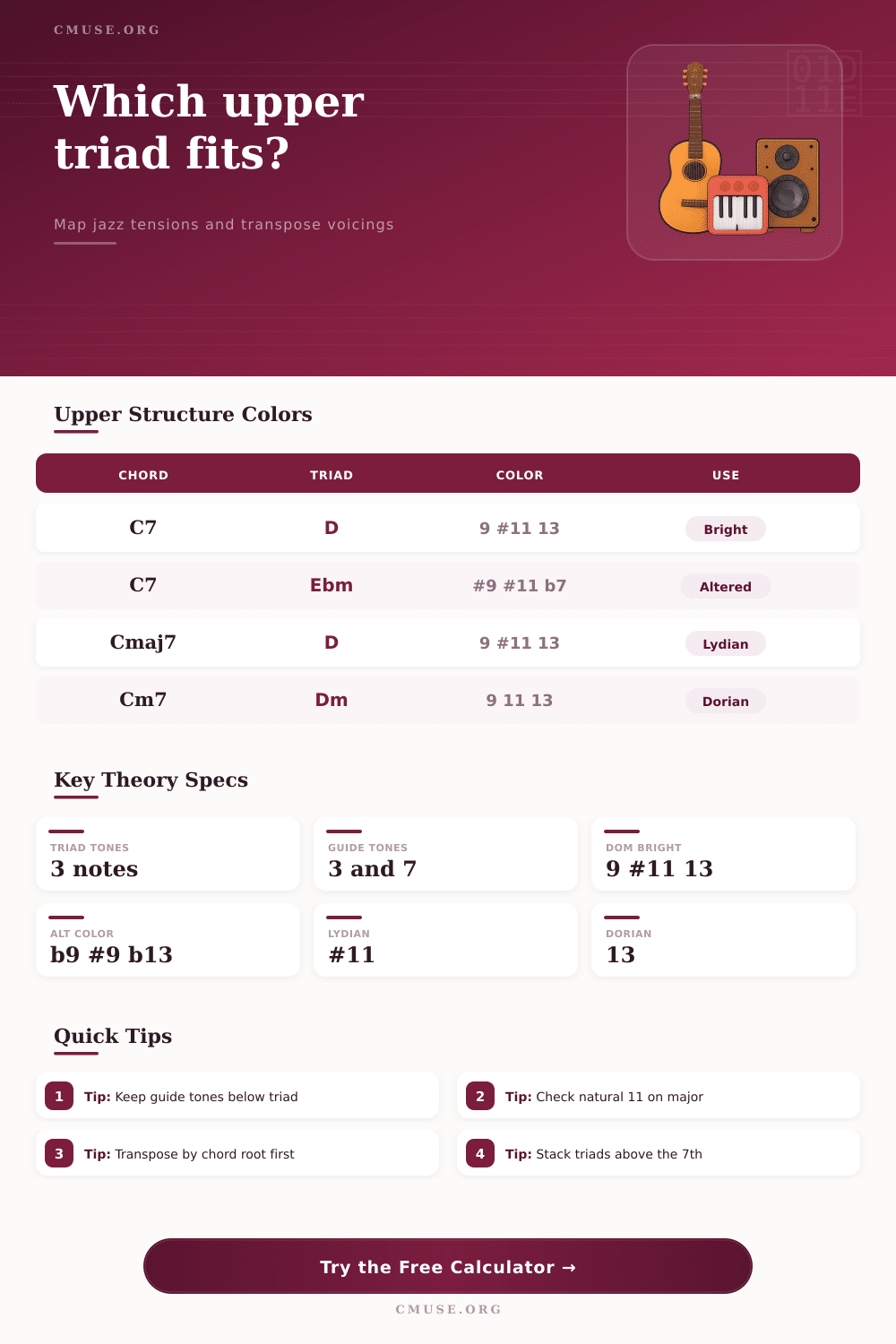
Upper Structure Triad Calculator
Map a three-note upper triad against a lower jazz chord, read the exact tensions, check fit, and transpose the color to a new root.
Preset use: Load a common jazz piano, arranging, guitar, or horn voicing color, then adjust the chord root, triad type, inversion, guide-tone support, and transposition target.
Calculation Breakdown
| Lower Chord | Upper Triad | Intervals Created | Common Color |
|---|---|---|---|
| C7 | D major | 9, #11, 13 | Lydian dominant brightness |
| C7 | Db major | b9, 11, b13 | Altered dominant pressure |
| C7 | Eb minor | #9, #11, b7 | Blues-altered upper color |
| C7 | Ab major | b13, root, #9 | Altered color with root anchor |
| C7 | Bb major | b7, 9, 11 | Suspended dominant sound |
| Lower Chord | Upper Triad | Intervals Created | Best Harmonic Use |
|---|---|---|---|
| Cmaj7 | D major | 9, #11, 13 | Lydian major voicing |
| Cmaj7 | B minor | 7, 9, #11 | Rootless Lydian cluster |
| Cmaj7 | E minor | 3, 5, 7 | Inside major seventh shell |
| Cm7 | D minor | 9, 11, 13 | Dorian minor extension |
| CmMaj7 | G augmented | 5, 7, b3 | Minor major color tone stack |
| Triad Quality | Formula From Triad Root | Example From D | Upper Structure Role |
|---|---|---|---|
| Major | 1, 3, 5 | D, F#, A | Clear, bright, easily transposed |
| Minor | 1, b3, 5 | D, F, A | Darker color with stable fifth |
| Diminished | 1, b3, b5 | D, F, Ab | Compressed altered dominant color |
| Augmented | 1, 3, #5 | D, F#, A# | Symmetric raised-fifth color |
| Suspended | 1, 2 or 4, 5 | D, E or G, A | Open quartal or suspended color |
| Preset | Lower Sound | Upper Sound | Primary Result |
|---|---|---|---|
| C7 over D | Dominant guide tones | D major | 9, #11, 13 |
| Cmaj7 over D | Major seventh shell | D major | Lydian major color |
| Cm7 over Dm | Minor seventh shell | D minor | Dorian extension stack |
| Cm7b5 over Db | Half-diminished shell | Db major | b9, 11, b13 |
| C7sus over Bb | Suspended dominant | Bb major | b7, 9, 11 |
Upper structure triad sit above the root and guide tone of a chord and are use to add color to the harmony of a song without adding clutter to the bass of the song. Upper structure triads does not work as a replacement for the chord in question but add color to the chord that the ear of the listener hears. The left hand plays upper structure triads by maintain the third and seventh notes of the chord and playing a three-note upper structure triad in the higher register of the piano.
The three notes of the upper structure triad introduces tensions to the chord that provide additional color for the listener to hear. The calculator help to determine the notes that will make up an upper structure triad. The calculator determines the notes of an upper structure chord by processing the mathematical relationship between the lower chord and the upper structure triad.
How to Use the Upper Structure Triad Calculator
The three elements that is required to be chosen before the calculator will provide the result are the chord quality, the root for the upper structure triad, and the support that the lower chord will provide for the upper structure chord. The relationship between the two chords will determine the sound that is created by the upper structure chord and the existing chord. Playing a D major triad over a C7 chord produce notes of the 9, the sharp 11, and the 13.
These notes lie outside of the sound of the basic dominant seventh chord, providing a bright sound to the chord progression. However, playing an E-flat minor triad over the same chord C7 produce notes of the sharp 9, the sharp 11, and the flat 7. The color of the chord change from Lydian dominant to altered.
The upper structure chord calculator display the potential for these changes in color because it check each of the notes within the upper structure chord against the tensions and the tones of the existing chord. It is not necessary for an upper structure chord to contain every type of tension note for the chord progression. The calculator can help determine how many chord tones the upper structure chord require.
The root and guide tones is typically the minimum needed to identify the chord and the upper structure chord extension. A fifth or a full shell can be added to the chord if desired but may crowd the register where the upper structure chord should exist. After performing the calculation of the components of the chord and the upper structure chord, the calculator will display a “fit” rating.
This rating will show the number of tensions that are safe for use in the chord and the number of tensions that is caution tone for that chord. The “moddern” rating show that the chord will sound open, whereas a “check” will indicate that at least one note may clash with the main chord melody of the song. Transposition is the process of moving the same color of chord to a new root for the chord.
The calculator can perform this task much more faster than a human can. Once the interval between the root of the chord and the upper structure chord root is established, that same chord can be transposed to any root. The calculator will display the result of the transposed chord next to the original chord result.
Therefore, using this calculator, a human can test the sound of the D major chord with the C7 chord over an F chord or a B-flat chord. The reference tables on the calculator are an aid for quickly comparing the upper structure chords to each of the different types of chords. The tables list common chord combinations, such as C7 chords with D major chords or C minor 7 chords with D minor chords.
These tables should be used to recognize common chord combinations rather than memorizing them. For example, it is easy to recognize that major chords tend to have bright extension and that minor chords tend to have flatter tones. Augmented and suspended chords also contain specific color that musicians who use these reference tables can recognize to recognize the differences in colors that each type of chord contributes to a chord progression.
One of the most common mistake in using upper structure chords is to treat it as if it were the entire chord of the song. The upper structure chord only provides color for the chord; the guide tones is still required. The chord cannot have its shell omitted or voice too high in the chord progression.
The inversion for the upper structure chord does not change the tensions that the chord produce. However, changing the inversion may allow for better voice leading or to move the upper structure chord’s notes away from the melody of the song. The calculator will display the tensions with the same labels for each inversion of the upper structure chord so that musicians can understand the trade-off of each inversion.
The logic that determines which tensions are safe to use in an upper structure chord and which should be avoided can be applied to changing the quality of the chord that is used. For instance, the major-seventh chord contain a note that allows for the inclusion of a sharp 11 that the dominant seventh chord would normally not contain. The caution list provided on the calculator will warn musicians of these type of changes.
Therefore, the calculator help musicians to understand which tensions are present in an upper structure chord and which should be avoided. The calculator will not, however, make the musicians’ musical choice for them. Whether a musician chooses to use the bright colors of a major triad or the altered colors of a minor chord is a decision that the musician must make.
All that the calculator will do is help musicians to test their musical ideas in different keys of the piano more quickly.