Ticket Allocation Calculator
Plan a live show ticket manifest from venue capacity through kill seats, house holds, guest list, production comps, promoter allocation, fan presale, general sale, VIP reserve, accessible seats, and remaining tickets.
Use case: Load a realistic show format, then adjust the manifest inputs before sharing counts with the venue, promoter, ticketing platform, and artist team.
Allocation Breakdown
| Bucket | Tickets | Percent of Capacity | Operational Note |
|---|
| Hold Type | Typical Range | Best Use | Release Check |
|---|---|---|---|
| Production kills | 2% to 8% | FOH, cameras, stage extensions, blocked sightlines | Confirm after final plot and venue walk |
| House holds | 1% to 5% | Venue, sponsor, suite, box office, and emergency seats | Review before public onsale and week of show |
| Artist guest list | 10 to 150 | Artist, band, manager, label, and family comps | Cut unused names before doors when possible |
| Production comps | 5 to 75 | Crew, radio, photo, local staff, credential needs | Match to credential list and settlement packet |
| Accessible inventory | By venue plan | Wheelchair, companion, aisle, and platform needs | Keep visible in the ticketing map |
| Late-release buffer | 1% to 5% | Last-minute sightline clears, returns, and production changes | Release in controlled batches |
| Preset | Capacity | Manifest Style | Allocation Pattern |
|---|---|---|---|
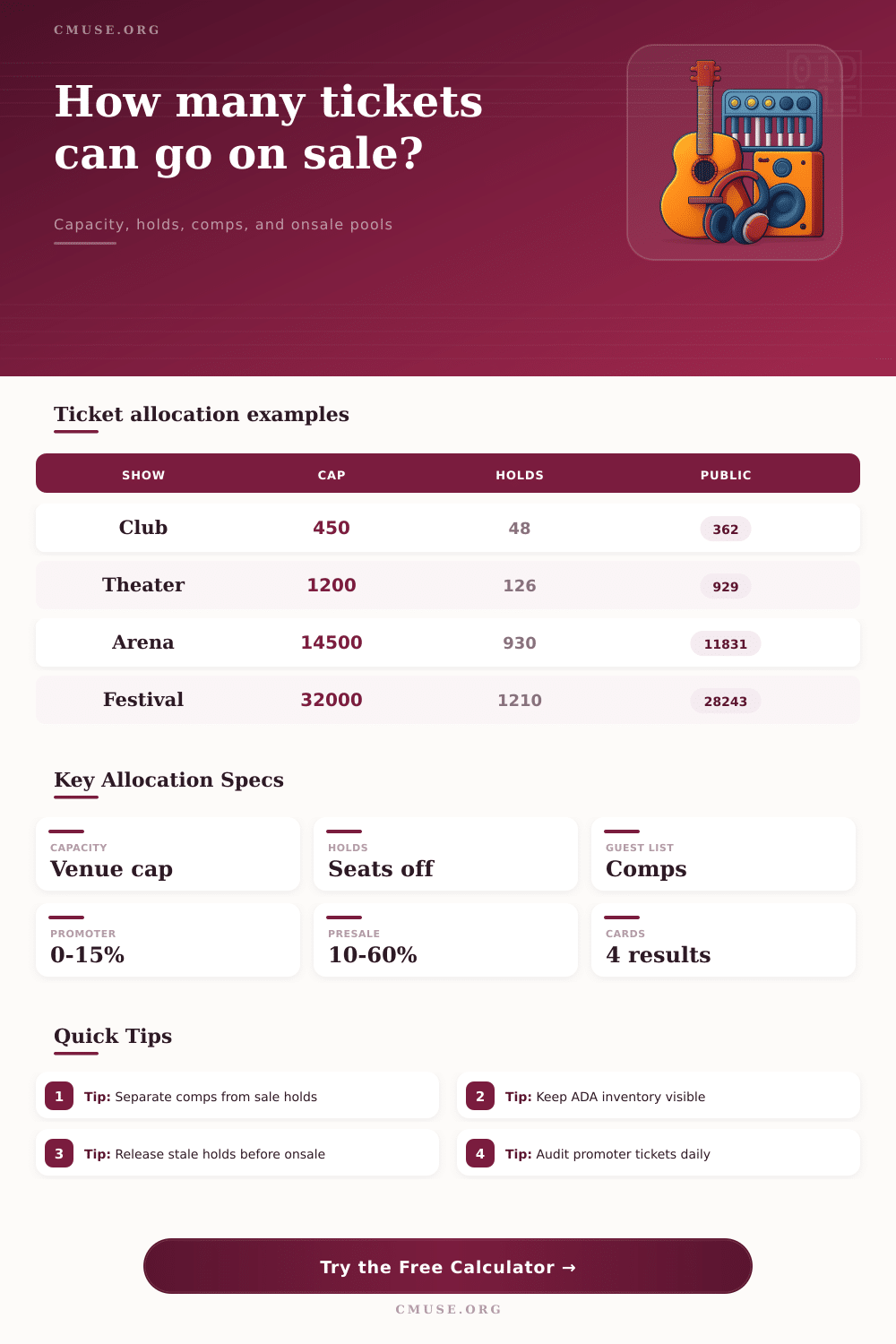
| Club Debut Night | 450 | General admission | Light holds, modest guest list, high fan presale |
| Seated Jazz Room | 280 | Reserved seating | Small map, careful accessible and house holds |
| Theater Tour Stop | 1200 | Reserved seating | Balanced promoter, VIP, fan club, and general sale |
| College Ballroom | 1800 | Hybrid | Student allotment, promoter pool, and GA release |
| Arena Bowl Show | 14500 | Reserved seating | Large production kills, VIP, promoter, and late release |
| Festival Stage Day | 32000 | Festival allocation | Credentials, sponsor holds, artist guests, broad public pool |
| Comedy Theater | 850 | Reserved seating | Camera kills, house holds, and lean guest list |
| Label Showcase | 600 | Hybrid | Heavy guest list and industry allocations |
| Symphony Hall | 2100 | Reserved seating | Subscriber, donor, accessible, and production holds |
| Charity Gala | 750 | Reserved seating | Sponsor block, guest list, VIP reserve, public balance |
| Channel | Count Basis | Who Owns It | Planning Cue |
|---|---|---|---|
| VIP or package reserve | Entered fixed count | Artist, promoter, or ticketing partner | Release unsold VIP before sellout pressure peaks |
| Promoter allocation | Percent of net sellable | Promoter and local marketing team | Keep usage reports separate from public inventory |
| Fan presale | Percent of public pool | Artist team, fan club, label, or venue list | Cap the pool so general sale has a clean launch |
| General sale | Public pool after presale and buffer | Box office and ticketing platform | Use this for the advertised onsale quantity |
| Late-release buffer | Percent of public pool | Ticketing manager or venue box office | Protects against production map changes and returns |
Ticket allocation are the process of dividing the total capacity of a venue into different group of tickets for sale. The ticket allocation process is a necessary part of planning a live show. Many people assumes that the ticket allocation process will happen automatically once tickets are made available for purchase.
However, the ticket allocation process can become a problem if it isnt manage at the beginning of the planning process. For example, if the venue find that the guest list for the show is too large, tickets may not be available for the music promoter’s marketing partner. Additionally, if the artist’s manager find that the public onsale pool of tickets is too small after the artist has selected there guests and production comps, there will not be enough tickets for the artist to promote to their followers on social media.
How to Plan and Divide Tickets for a Live Show
In these instances, the venue must reduce the total capacity by several category to determine how many ticket can be sold to the public. The first step in the ticket allocation process is to determine which tickets is not to be sold to the public. Tickets can be eliminated from the venue for several reason.
For example, production kills are tickets that are eliminate due to stage equipment. Sightline kills are tickets that are eliminate due to the view of the stage being blocked for some of the tickets. House holds are tickets that are eliminate for the needs of the venue or its sponsor.
Artist guest lists and production comps are tickets that is given away to the artist’s guests or members of there production staff. Additionally, accessible inventory is tickets that are give to individuals with disabilities and must be protected to maintain the venues accessibility for those individuals. Each of these category will reduce the total available ticket for the public.
The second step in the ticket allocation process is to divide the tickets that is left after eliminating tickets for the various categories. For example, the venue can allocate tickets for VIP guest, package sales, and other sales that is managed separately from the tickets that are made available for the public. Additionally, the promoter can be allocated the tickets for a specific percentage of the tickets that is left after eliminating tickets for the various category for the public.
The tickets for the promoter should of be large enough for the promoter to reach there ticket sales goal for the event but not so large that the tickets available for the public are too small. Additionally, the venue can allocate tickets for fan presales to specific fan club or groups. If the tickets allocated for fan presales are too large, the tickets available for public onsale will be too small for the general public to purchase.
A late-release buffer of tickets can be held for each venue and show. By holding a percentage of tickets until the day before the show, the venue can account for any change in the production of the performance, changes in tickets sold, or changes to the sightlines for the show. By holding these tickets in a late-release buffer, the venue will make the tickets available for those who need them and the venue will not have to make promise of tickets to others.
Using a calculator in the ticket allocation process will allow the venue to manage the tickets according to the step in the ticket allocation process. Human pressure can make the ticket allocation process difficult. For example, an artist may want to add tickets to the guest list after the guest list has been establish.
Or, the promoter may promise tickets to another organization for there efforts in promoting the artist’s music. In these cases, the manager must assign each type of ticket to a specific person who is responsible for that type of ticket. Additionally, each type of ticket must have a specific date of release so that the venue may manage and promised the tickets to those who need them but without going beyond the original plan for the tickets available for the public.
The type of tickets that will be held at the venue may change the ticket allocation process. For example, tickets for a general-admission club may be allocated different than tickets for a venue with a reserved theater for the show. Additionally, arena tickets for rock concert may be allocated different than tickets for a festival.
To ensure that the tickets are managed appropriately for a live performance, the ticket allocation process should be completed as early as possible in the planning of the show. The ticket allocation plan should be shared with the venue and the promoter prior to the creation of marketing material for the show. Additionally, steps should be taken to ensure that the tickets that are allocated for the public remain protected and are not allocated to other category.
Following these step will ensure that the ticket allocation process is performed in a way that ensures that the numbers for ticket availability are accurate right up until the date of the show.