
The thump of a drum has followed humans since we first figured out how to hit something that resonates. Whether it was a hollow log beside a fire or a taut animal skin in a ritual circle, that simple act of striking created the heartbeat of music, ceremony, and communication. Today the drum family spans every corner of the globe and every genre you can name.
Understanding the main types helps you hear music more clearly, choose the right instrument if you decide to play, and appreciate why certain sounds feel perfect in specific contexts.
Drums are percussion instruments that produce sound when a membrane is struck, shaken, or rubbed. The membrane, called a head, stretches over a shell or body, and the combination of head tension, shell material, size, and playing technique creates wildly different characters. Some drums whisper while others roar.
Some keep time with machine-like precision while others bend and breathe with improvisational freedom. The list that follows walks through the major families, starting with the most familiar and moving toward instruments that might surprise you.
The Most Popular Types of Drum Instruments
1. Snare Drums
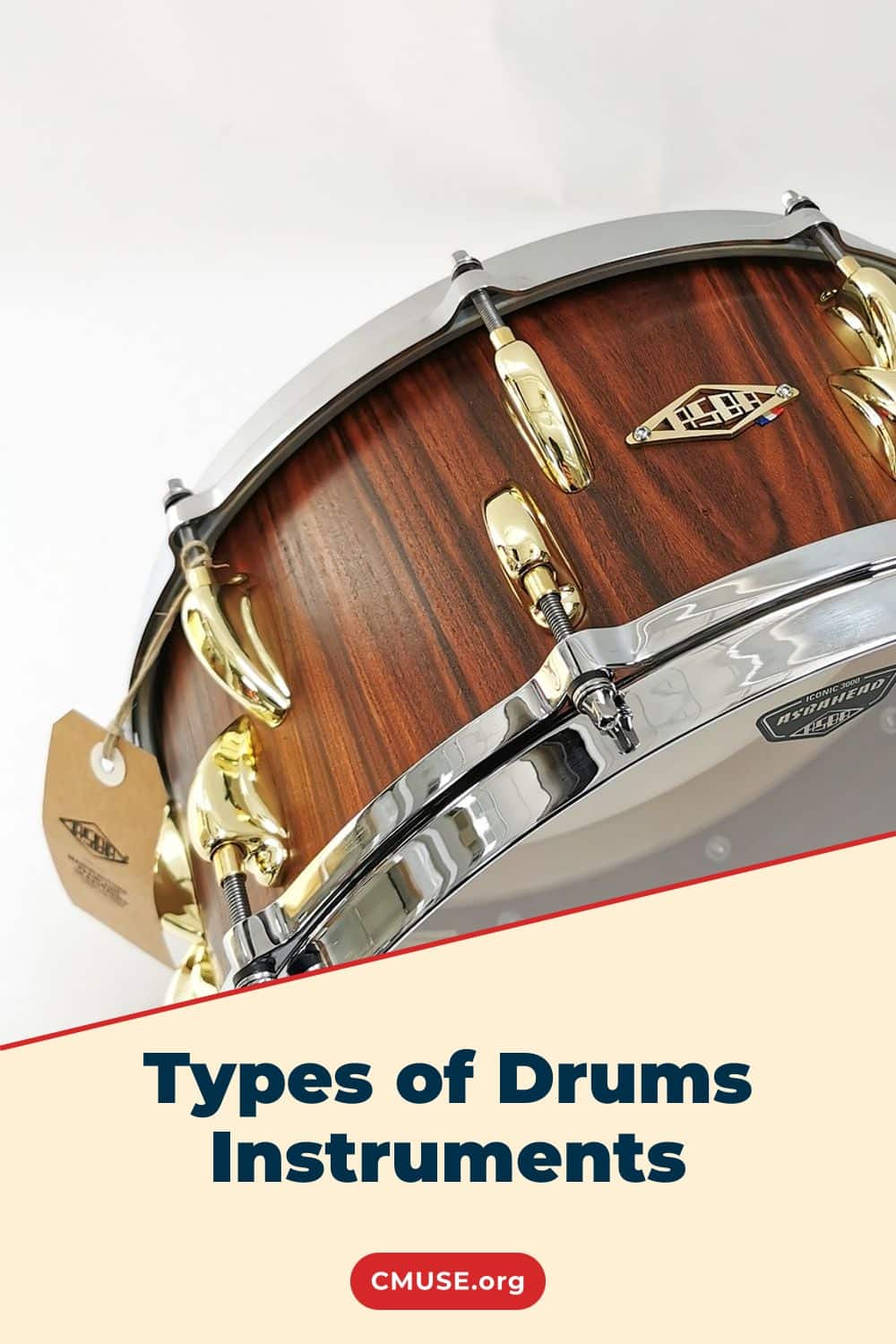
Snare drums sit at the center of the modern drum kit for a reason. Their crisp, cracking voice comes from a set of metal wires stretched across the bottom head called snares. When the top head is hit, the vibration travels through the shell and rattles those wires, giving the sharp backbeat that defines rock, pop, funk, and marching music.
A good snare can cut through a full band without sounding harsh, which is why drummers obsess over shell depth, material, and snare tension. The instrument is small enough to fit on a stand yet versatile enough to deliver both a tight military crack and a fat, pillow-like thud when the snares are turned off.
2. Bass Drums
Bass drums deliver the low-end pulse that you feel in your chest more than you hear with your ears. In a rock or jazz kit the bass drum is usually between 18 and 24 inches in diameter and played with a foot pedal. Its job is foundational: locking in with the bass guitar to create groove.
In orchestral music the bass drum is larger, often suspended or placed on its side, and struck with a soft mallet to produce thunderous booms that can evoke cannon fire or distant earthquakes. The depth of sound depends on shell depth and head choice. A shallow kick gives punch while a deeper one offers more boom, which matters when you are trying to fill a stadium or a small jazz club.
3. Tom-toms
Tom-toms, often just called toms, fill the space between snare and bass in pitch and function. A standard kit includes at least two: a smaller rack tom mounted above the bass drum and a larger floor tom that stands on legs. Their heads are tuned to specific notes that add melodic color to drum fills.
Because toms lack snares they produce rounder, more sustained tones than the snare. Drummers use them to build tension during transitions or to punctuate a big chorus. The number of toms on a kit can climb quickly in metal or progressive rock, where extra drums allow for more complex patterns and dramatic sweeps across the set.
4. Congas
Congas originated in Cuba but trace their roots to West and Central African traditions. These tall, slender drums are played in sets of two or three, each tuned to a different pitch. The player sits and strikes the heads with hands and fingers, using techniques like open tones, slaps, and muted bass strokes to create complex polyrhythms.
Congas shine in salsa, rumba, Latin jazz, and Afro-Cuban music, but they have crossed over into pop, rock, and fusion. Their warm, woody tone comes from the tapered wooden or fiberglass shell and the way the head is tucked and tightened with metal hardware. Unlike kit drums, congas are meant to sing rather than simply mark time.
5. Bongos
Bongos are the smaller, higher-pitched cousins of congas. They come as a matched pair connected by a bridge, with the larger drum called the macho and the smaller the hembra. Players hold them between their knees or on a stand and use fingertips, palms, and thumbs to produce bright, cutting rhythms.
Bongos often provide the lively chatter that dances around the steadier pulse of congas. Their portability and expressive range make them favorites for street performers, studio percussionists, and anyone wanting to add a lively Latin flavor without hauling heavy gear.
6. Djembe Drums
Djembe drums traveled from West Africa to the rest of the world on the backs of musicians and dancers in the late twentieth century. Carved from a single piece of wood with a goblet shape, the djembe has a wide head that allows for three distinct tones: bass, tone, and slap. A skilled player can make the drum speak in sentences.
The djembe is loud enough to be heard outdoors without amplification yet sensitive enough for intricate acoustic work. Its rope-tuning system lets the head tension change with weather and playing style, which is both a challenge and an advantage. In drum circles and contemporary world music, the djembe often leads because its voice carries both power and clarity.
7. Frame Drums
The frame drum is one of the oldest drum designs and still one of the most intimate. It consists of a shallow shell, usually wooden, with a single head stretched across it. Some models have jingles or metal beads inside the frame that add a tambourine-like shimmer.
Players hold the drum in one hand and strike it with the other, using fingers, palms, and knuckles to coax out bass tones, sharp snaps, and delicate rolls. Frame drums appear in Irish, Middle Eastern, Native American, and many other traditions. Their quiet voice makes them perfect for meditative playing or accompanying a singer in a small room.
The simplicity hides centuries of refined technique.
8. Steelpan Drums
Steelpan drums, also called steel drums or pans, were invented in Trinidad in the 1930s from discarded oil barrels. Each pan is carefully hammered and tuned so that different areas of the metal surface produce specific notes when struck with rubber-tipped mallets. A single tenor pan can cover two octaves while larger bass pans cover the low end.
The bright, ringing tone cuts through steel bands and Caribbean music with unmistakable cheer. Playing one well requires learning to mute unwanted overtones, which is harder than it looks. The steelpan proves that even industrial waste can become a sophisticated melodic percussion instrument.
9. Taiko Drums
Taiko drums dominate Japanese ensemble performance with their sheer physical power. These barrel-shaped drums, often mounted on stands, are struck with thick wooden sticks called bachi. Taiko groups perform synchronized choreography while playing, turning music into theater.
The odaiko, the largest type, can be several feet across and produce a deep roar that vibrates the floor. Smaller shime-daiko provide crisp, high-pitched counterpoint. The tradition emphasizes breath, posture, and group unity as much as musical precision.
Watching a taiko ensemble is as much a visual and athletic experience as an auditory one.
10. Talking Drums
The talking drum of West Africa earns its name by mimicking the tones and rhythms of human speech. Shaped like an hourglass with two heads connected by leather cords, the drum is held under one arm while the other hand strikes the head with a curved stick. By squeezing the cords the player changes the tension and therefore the pitch, allowing the drum to slide between notes.
In traditional Yoruba and other cultures, master drummers use talking drums to send proverbs, news, and poetry across distances. The instrument reminds us that drums once carried language itself before telephones or radio existed.
Each of these drums carries its own culture, technique, and emotional color. Some are built for power, others for subtlety. Some favor the hands, others sticks or mallets.
What they share is the basic human impulse to strike a surface and make the air move. Once you start noticing the differences, you will hear them everywhere: the sharp crack that drives a rock chorus, the warm thump under a salsa melody, the distant boom that signals ceremony. Pick one that speaks to you, find a teacher or a good tutorial, and start hitting things on purpose.
The rhythm has been waiting.