
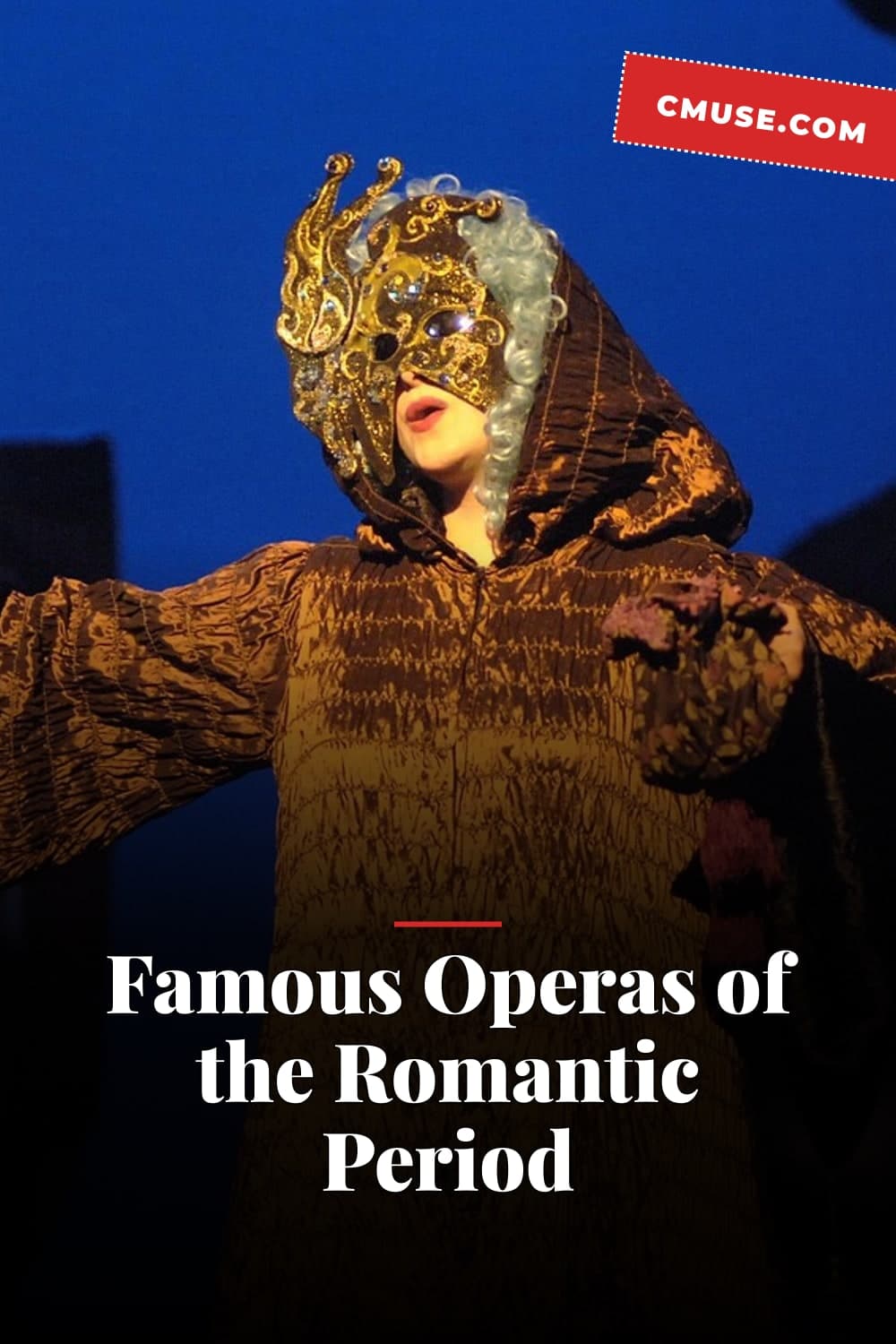
The Romantic period in opera was less about polite drawing-room stories and more about sweeping emotion, doomed love, and characters who would rather die than compromise. Between the early 1800s and the first years of the twentieth century, composers stopped worrying quite so much about formal rules and started chasing the sound of the human heart cracking open. If you have ever felt that a single aria could rewire your nervous system, these works are probably why.
The operas on this list did more than fill theaters. They changed how people thought about music, drama, and even politics. Some sparked riots.
Others invented vocal techniques still idolized today. They remain the backbone of every major opera house season for a reason. What follows is a tour of the standouts that defined the era, chosen because each one pushed the art form somewhere new while still delivering melodies that refuse to leave your head.
Essential Romantic Operas You Should Know
1. La Traviata
Verdi’s La Traviata opens with one of the most famous party scenes in all opera and then proceeds to break your heart in slow motion. Based on the play by Alexandre Dumas fils, it follows Violetta, a courtesan in Paris who falls genuinely in love with the young Alfredo. Society, illness, and a disapproving father conspire to separate them.
The brilliance lies in how small the gestures become. A handful of banknotes thrown in contempt, a quiet “Addio del passato” sung while coughing blood, these moments hit harder than any grand historical pageant.
Verdi wrote the score in 1853, right after a string of hits, yet this one was initially a flop because the first Violetta was, in the words of one critic, “too fat to be believable as a consumptive.” Within a year the opera had been reworked, recast, and vindicated. Today its drinking song “Libiamo ne’ lieti calici” is shorthand for opera itself, but the real power sits in the quiet final act where the orchestra seems to breathe with the dying heroine. That ability to make an entire theater feel the fragility of a single human life is why La Traviata still sells out every revival.
2. Tristan und Isolde
Next comes Wagner’s Tristan und Isolde, a work so harmonically daring it basically invented modern music. Forget knights and dragons for a moment. This is a four-hour meditation on unsatisfied desire wrapped inside a love potion and a forbidden affair.
The famous “Tristan chord” at the very beginning withholds resolution for so long that listeners in the 1860s literally felt seasick. Wagner wanted the music to feel like longing itself, endless, aching, and finally released only in the moment of death.
The opera demands singers with both power and subtlety. Isolde must rage, seduce, and then dissolve into transfiguration all in one evening. Modern productions often strip away the medieval trappings and place the story in clinical white rooms or abstract landscapes precisely because the emotional temperature is already so extreme that literal ships and swords can feel redundant.
If you only ever listen to one Wagner opera, make it this one. The Liebestod at the end is not just a soprano showpiece. It is the sound of someone choosing ecstasy over continued existence, and once you have heard it performed well you understand why the Romantic movement could not look away from love and death.
3. Carmen
Georges Bizet’s Carmen arrives like a gust of cigarette smoke and Spanish heat cutting through the salon politeness of French opera. The title character is a factory worker and part-time smuggler who refuses to be owned by any man. She sings the Habanera like a dare, flirts with the soldier Don José, then drops him for a bullfighter.
The final scene outside the bullring, where José stabs her in a jealous rage while the crowd inside cheers the toreador, remains one of the most shocking moments in all opera.
What makes Carmen immortal is its refusal to moralize. Bizet gives the “immoral” woman the best tunes and the clearest gaze. The orchestra borrows from flamenco, street bands, and popular song, creating a score that feels dangerously alive.
When the opera premiered in 1875 it scandalized Paris, yet within a decade it was being performed everywhere from New York to Cairo. The lesson is simple. Sometimes the most enduring art is the kind that makes its first audience deeply uncomfortable.
4. La Bohème
Giacomo Puccini’s La Bohème is the ultimate young-artist opera. Four struggling bohemians in a freezing Paris garret, one tubercular seamstress named Mimì, and a love story so tender it hurts. The music glides between conversational patter and soaring lyricism without ever feeling forced.
When Rodolfo and Mimì meet in the dark because her candle has gone out, their tentative “Che gelida manina” and “Sì, mi chiamano Mimì” feel like real people discovering each other in real time.
Puccini’s genius was knowing exactly when to pull back. The famous Act II café scene explodes with chorus, children, and marching bands, then the final two acts shrink to a few voices and a few instruments until the deathbed scene feels unbearably intimate. If you bring a date to this opera and both of you leave with dry eyes, you should probably check your pulses.
The work’s emotional honesty explains why it has never left the standard repertoire since its 1896 premiere and why Jonathan Larson could transplant its DNA into the rock musical Rent a century later without breaking anything essential.
5. Eugene Onegin
Moving to the Russian wing, Tchaikovsky’s Eugene Onegin offers a different kind of heartbreak, cooler, more aristocratic, and no less devastating. Based on Pushkin’s verse novel, it follows the bored dandy Onegin who rejects the innocent Tatiana, only to fall in love with her years later after she has married someone important. The letter scene, in which Tatiana stays up all night pouring her soul onto paper while the orchestra mirrors her racing thoughts, is worth the price of admission by itself.
Tchaikovsky understood social constraint as well as passion. The polonaise that opens the final ball scene is elegant, icy, and merciless. It tells you everything about why these two cannot simply run away together.
The opera rewards repeated listening because the same musical material keeps returning transformed by time and regret. What felt like youthful infatuation in Act I becomes tragic irony by Act III. That long arc is pure Romanticism, the belief that emotion remembered in tranquility is still capable of destroying you.
6. Norma
Bellini’s Norma is the high priestess of bel canto, a work that demands absolute vocal perfection and dramatic intelligence in equal measure. Set among the Druids resisting Roman occupation, it centers on Norma, who has secretly borne two children to the enemy proconsul Pollione. When he falls for a younger priestess, Norma’s rage, guilt, and eventual self-sacrifice unfold in long, sinuous melodies that seem to float on air.
The aria “Casta Diva” is legendary, yet the real climax comes in the final duet “Deh! Non volerli vittime” where two sopranos intertwine in perfect thirds while choosing death together.
The opera’s influence stretches far beyond its 1831 premiere. Chopin borrowed its ornamentation for his nocturnes. Wagner studied its orchestration.
Even today, only a handful of singers in each generation can truly sing it. That rarity is part of the appeal. When a great Norma appears, opera lovers treat it like a solar eclipse, something you clear your calendar to witness.
7. Lucia di Lammermoor
Donizetti’s Lucia di Lammermoor brings us the most famous mad scene in the entire repertoire. After being forced into a political marriage and believing her lover has betrayed her, Lucia murders her bridegroom on their wedding night and then appears at the reception in a blood-stained nightgown. What follows is nearly twenty minutes of unhinged coloratura, flute obbligato, and descending scales that depict a mind completely detached from reality.
The scene is not mere vocal fireworks. Donizetti uses the glass harmonica (later replaced by flute) to suggest the fragile, otherworldly state Lucia now inhabits. Modern productions sometimes add choreography or projected hallucinations to emphasize the psychological depth.
Beneath the bel canto dazzle sits a shrewd study of a woman crushed between family duty and personal desire. That combination of beauty and horror is why audiences still gasp when the mad scene begins.
8. Der Rosenkavalier
Finally we reach Richard Strauss’s Der Rosenkavalier, which stands at the very edge of the Romantic era while already waving at modernism. Set in eighteenth-century Vienna, it concerns the Marschallin, a woman of a certain age who knows her young lover Octavian will eventually leave her for someone his own age. The presentation of the silver rose, the mistaken identities, and the final trio in which three very different women sing overlapping lines of acceptance, renunciation, and new love, these elements create one of the most sophisticated comedies in opera.
Strauss’s waltzes are so persuasive you almost forget the score is also harmonically adventurous. The Marschallin’s monologue about the passage of time (“Die Zeit, die ist ein sonderbar Ding”) is as profound as anything Wagner wrote, yet delivered with a light touch that feels uniquely Viennese. The opera reminds us that Romanticism did not always require death on stage.
Sometimes the deepest emotion is simply saying goodbye with grace while the world keeps turning.
These works still speak because they treat big feelings as worthy of serious music. Whether you are new to opera or have seen dozens of productions, each of these scores offers a different doorway into the same truth. Passion, when taken seriously enough to be sung at full volume for hours, changes both the singer and the listener.
Go hear one live if you possibly can. The voice vibrating in real air, the collective intake of breath at a high note held just a second longer than seems humanly possible, that experience is what the Romantics were chasing all along. Once it happens to you, you will understand why these operas have outlived every revolution that tried to declare them obsolete.