Stereo Width Calculator
Estimate side-to-mid ratio, correlation, mono fold-down change, phase angle, and left-right balance for a stereo track, bus, or full mix.
🎚 Stereo Width Presets
📐 Width And Correlation Inputs
📊 Width Meter Reference Grid
📝 Correlation And Mono Compatibility Table
| Correlation Range | Typical Width Read | Mono Fold-Down Behavior | Best Use |
|---|---|---|---|
| +0.80 to +1.00 | 0% to 35% | Very stable center image, little side loss | Lead vocal, kick, snare, bass, dialogue, club playback |
| +0.30 to +0.79 | 35% to 90% | Usually stable with some side ambience loss | Drum overheads, piano, doubled guitars, master bus width |
| -0.10 to +0.29 | 90% to 160% | Mono can lose spaciousness and some transient detail | Rooms, pads, reverbs, backing textures, stereo percussion |
| -0.50 to -0.11 | 160% to 300% | Noticeable mono cancellation is likely | Special effects, ear candy, short returns, checked transitions |
| -1.00 to -0.51 | 300%+ | Severe cancellation or polarity conflict | Only intentional phase effects that do not carry the song |
🎵 Source Width Targets
| Source | Useful Width | Correlation Target | Calculation Note |
|---|---|---|---|
| Lead vocal / mono lead | 0% to 25% | +0.80 to +1.00 | Side energy should mainly come from sends, doubles, or ambience. |
| Bass and low kick band | 0% to 30% | +0.85 to +1.00 | Low-band mono blend should be high below the chosen crossover. |
| Drum overheads | 55% to 120% | +0.25 to +0.75 | Phase check near snare body and cymbal range before widening. |
| Synth pad / keyboard | 90% to 180% | -0.05 to +0.45 | Wide is fine if the musical center survives mono fold-down. |
| Reverb / delay return | 100% to 220% | -0.20 to +0.35 | Negative correlation can work when the dry source remains solid. |
| Master bus | 80% to 130% | +0.30 to +0.75 | Small M/S moves are usually safer than large side boosts. |
🔀 M/S Formula Cheat Sheet
| Metric | Formula Used | What It Means | Practical Read |
|---|---|---|---|
| Mid energy | (L² + R² + 2rLR) / 4 | Shared center content after correlation is included | Higher mid means stronger center and better mono focus. |
| Side energy | (L² + R² - 2rLR) / 4 | Difference content between left and right | Higher side means more width and more mono sensitivity. |
| Width percent | 100 x side RMS / mid RMS | Side-to-mid ratio on a meter-like scale | 100% means side RMS equals mid RMS. |
| Mono change | 20 log10(mono / stereo average) | Fold-down level shift relative to stereo average | Large negative values mean stereo material disappears in mono. |
| Delay phase | 360 x frequency x delay / 1000 | Phase rotation caused by interchannel delay | 90° and 270° points can sound wide but fragile. |
💡 Width Calculation Tips
Stereo width refer to the distance between the left and right channel and can present problems for mixes that dont work good in mono. Stereo mixes made to sound well on headphones may sound weak on mono speaker. Mono speakers plays all sound from both left and right channels through a speaker.
When the left and right channels contains conflicting information, it will cancel out on mono speakers and make the audio thinly. The correlation of the left and right channels measure the degree to which the channels agree with each other. The value range from minus one to plus one.
Stereo Width and How to Make Mixes Work in Mono
Values of plus one on the scale mean that the information on the left and right channels is the same. A value of zero mean that there is no relationship between the left and right channels. Values of minus one mean that the channels are playing conflicting information.
Engineers should aim for positive value of correlation because these will maintain the audio signal when it is translated into mono. Values of negative correlation means that the channels may cancel each other out and lose energy when translated into mono. Other factors that affect stereo width includes the level balance between the left and right channels and the timing of each channel.
Imbalances in the level of the channels may make the center image move away from the center of the stereo field. Adding delay to the left or right channel may allow engineers to create a sense of width in the stereo field. However, adding delay to channels can also cause phase rotation that may lead to the loss of certain frequency in mono mixes.
For example, adding a ten millisecond delay to channels may make the mix sound wide. However, at ten milliseconds, the low frequency may cancel each other out in mono. Another technique for controlling stereo width is the use of mid-side processing.
The mid signal for the left and right channels are processed in the center of the stereo field. The side signal for the channels determine the stereo width. Engineers can increase the mid signal to make the center image of the mix more stronger.
Increasing the side signal will increase the stereo width of the mix. However, engineers must be careful to not increase the side mix for frequency of sub-bass because the sub-bass frequencies should remain in mono. Different instrument require different amounts of stereo width and a certain range of correlation value.
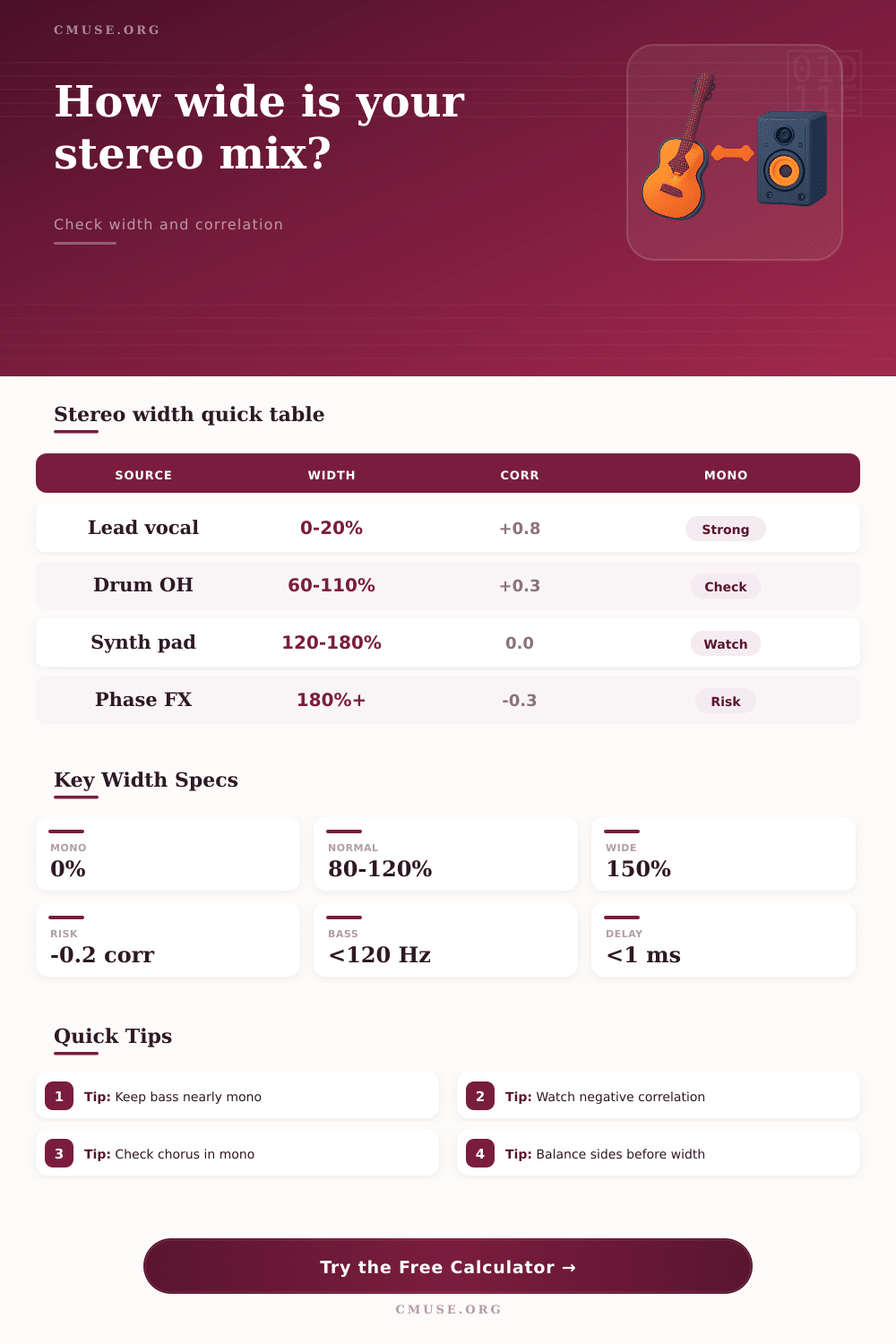
Drums has a stereo width of between sixty and one hundred ten percent and have middling values of correlation. Lead vocals has a stereo width of between zero and twenty percent because they needs to stay in the center of the stereo field. The bass stereo width should be under thirty percent and have a high value of positive correlation between the left and right stereo channel.
Synth pads has a high stereo width, often exceeding one hundred twenty percent of the stereo field. Creating a reference grid will help engineers to avoid common problem in stereo width. A mono signal have a stereo width of zero.
The normal stereo field range between eighty and one hundred twenty percent of the monitor. Engineers should avoid stereo width that have a correlation value of less than negative zero point two. For music mixes for clubs, high correlation value of above zero point seven should be used.
For music mixes for streaming platforms, audio mix engineer should always test their mix in mono because streaming platforms will fold the stereo channel into mono. Using low-band mono blending may improve the mix. Low-band mono blending is the process of making frequencies under a certain point, such as one hundred twenty hertz, mono.
By making frequencies under one hundred twenty hertz mono, the engineer can maintain the definition of the low frequency in the mix. The rest of the frequency can have stereo width. Engineers should always use both a meter and their ear to determine stereo width.
Using a meter yield mathematical data about stereo width. However, using their ears allow engineers to hear the impact of stereo width on musical content. Engineers can fine tune the levels, correlation, and mid-side ratio for their mix so that it has good stereo width for both stereo monitors and mono speakers.