🎹 Instrument Depreciation Calculator
Calculate annual depreciation, remaining value & total loss for any musical instrument
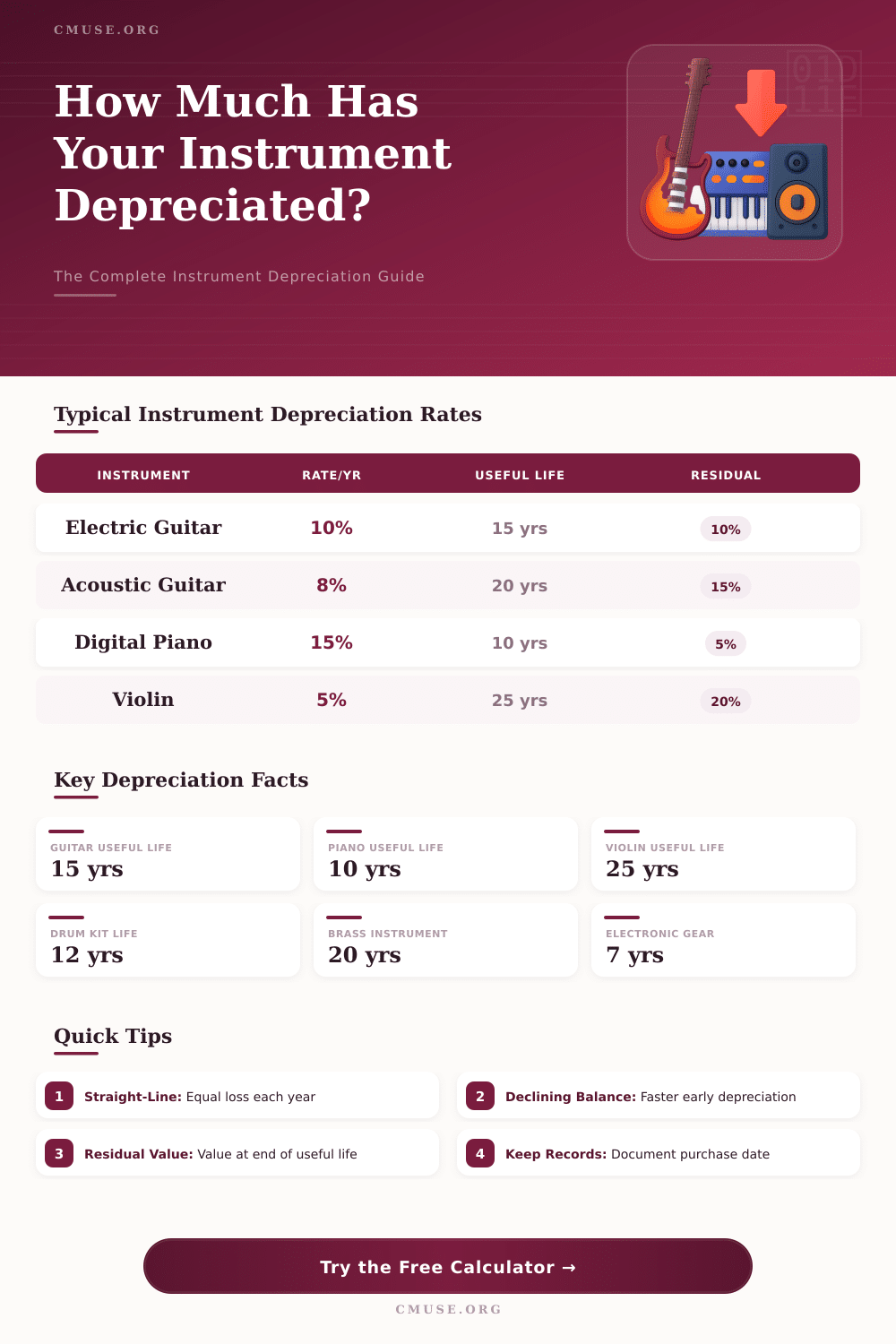
| Instrument | Useful Life | Typical Rate/Yr | Residual Value |
|---|---|---|---|
| Electric Guitar | 12–18 yrs | 7–12% | 5–15% |
| Acoustic Guitar | 15–25 yrs | 5–10% | 10–20% |
| Digital Piano / Keyboard | 8–12 yrs | 10–18% | 2–8% |
| Acoustic Piano (Upright) | 20–40 yrs | 3–6% | 15–30% |
| Violin (Student) | 15–20 yrs | 5–8% | 10–20% |
| Violin (Professional) | 25–50 yrs | 2–5% | 20–40% |
| Cello | 20–40 yrs | 3–6% | 15–30% |
| Drum Kit (Acoustic) | 10–15 yrs | 8–14% | 5–15% |
| Electronic Drums | 6–10 yrs | 12–20% | 3–8% |
| Trumpet / Trombone | 15–25 yrs | 5–8% | 10–20% |
| Saxophone | 15–25 yrs | 5–8% | 10–20% |
| Flute / Clarinet | 15–20 yrs | 5–9% | 8–18% |
| Synthesizer / Workstation | 5–10 yrs | 15–25% | 2–8% |
| Bass Guitar | 12–20 yrs | 6–12% | 8–15% |
| Method | Year 1 Loss | Year 5 Loss | Best For |
|---|---|---|---|
| Straight-Line | Equal share | Equal share | Acoustic instruments, bows |
| Declining Balance (1.5x) | Higher | Lower | Guitar amps, PA systems |
| Double Declining Balance | Highest | Lowest | Electronic gear, synthesizers |
| Sum of Years Digits | High | Moderate | Drum kits, stage equipment |
| Year | Annual Depreciation | Accumulated Dep. | Book Value |
|---|---|---|---|
| 1 | $90.00 | $90.00 | $910.00 |
| 2 | $90.00 | $180.00 | $820.00 |
| 3 | $90.00 | $270.00 | $730.00 |
| 4 | $90.00 | $360.00 | $640.00 |
| 5 | $90.00 | $450.00 | $550.00 |
| 6 | $90.00 | $540.00 | $460.00 |
| 7 | $90.00 | $630.00 | $370.00 |
| 8 | $90.00 | $720.00 | $280.00 |
| 9 | $90.00 | $810.00 | $190.00 |
| 10 | $90.00 | $900.00 | $100.00 |
Instrument depreciation simply helps to spread the expense of a purchase that will last more than a year, instead of paying everything right away in the books. The IRS has rules that show how many years various valuable items must stay used roughly. If some instrument or gear passes the one-year limit, then one can not subtract the whole amount in one single tax year.
The system that stands behind all this is called Modified Accelerated Cost Recovery System, MACRS for short. Here is how it works: one subtracts a bigger part of the value at first, and later less as time passes. For musical instruments they belong to the seventh-year group so this is the period that one works with for tax reasons.
How Instrument Depreciation Works for Musicians
When a musician buys something that is made for long-term use, then it follows that depreciation plan.
Not only gear counts for instrument depreciation, but the list goes much further. Scores of sheet music, arrangements, office furniture, recordings, cars and computers all can be depreciated, if they relate to your business. Big expenses, like instruments, amplifiers, speakers, vans or cameras, do not count as direct business costs.
Instead, one takes deductions for instrument depreciation according to schedule. Everyday costs, for instance strings and repairs? Those recieve immediate deduction, which is very helpful.
Here is where things become a bit unusual: instrument depreciation is only a tax idea and does not have relation with the real market value of your instrument. Even so, it affects things later, if you sell or donate it. The cost basis starts from what you paid, and if you sell, the total depreciation can reverse as big profit.
There are also tests about profitability that you must pass to use those deductions originally.
In the real world values work entirely differently. Cheap instruments commonly lose value just after leaving the store. Used guitars of lesser known brands usually value around 50 to 60 percent of the original price.
Mid-level brands, like Epiphone or Squier, keep about 60 to 70 percent. Top ones like Fender or Gibson? Those most commonly keep 80 to 90 percent, give or take.
PA systems and recording gear even so quickly lose value, because new models beat old ones and way less. Home theater receivers suffer the most strongly.
Fine classical and vintage string instruments follow entirely other laws. They do not really lose value a lot. Vintage guitars from good makers can even grow in value as years pass.
Handmade instruments from respected builders tend to rise instead of lose. Cellos and violins widely gain value, while electric basses, guitars, amplifiers and pedals steadily decline. Buying used top instruments is truly wise financially…
Someone else already carried the mainstreamdepreciation cost. Restored quality instrument can give 70 to 80 percent of new ability for only 40 to 50 percent of the price.